Instant Classic ‘The Brutalist’ Lands A Gut Punch

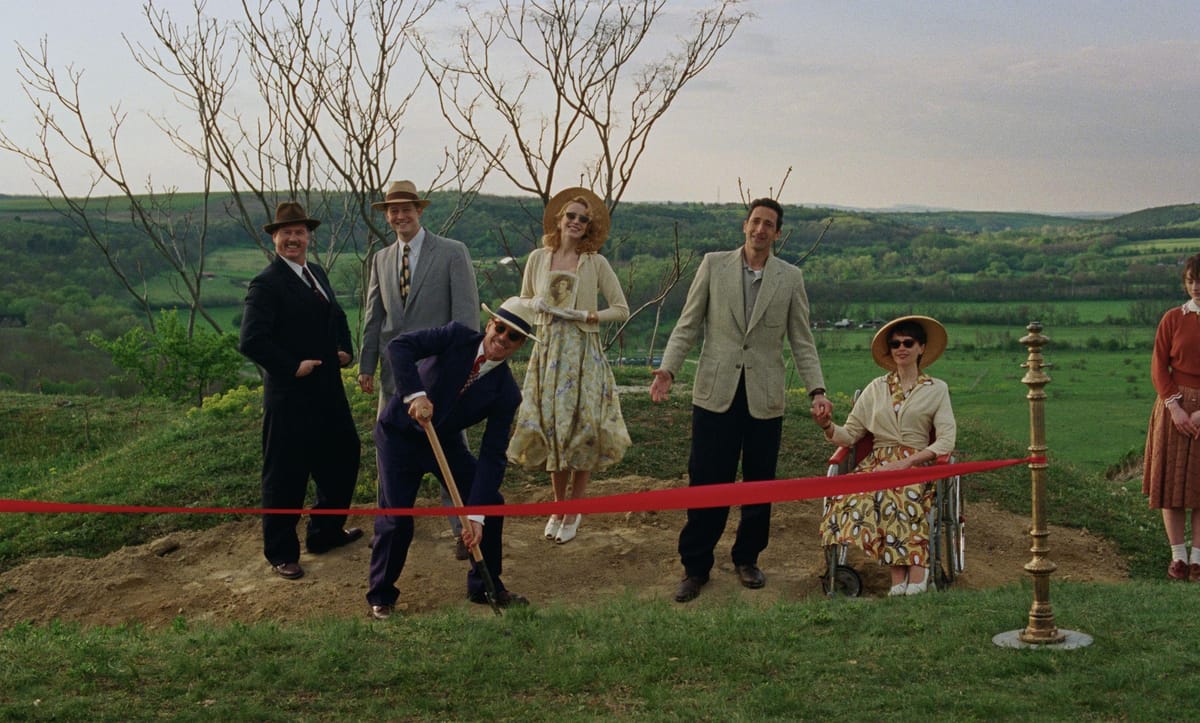
In our current blockbuster era of CG-forward theatrical content churn from the major studios, a common lament from those who love movies is that old chestnut: “They sure don’t make ’em like they used to.” That “used to” typically reference films in the mode of John Cassavetes (A Woman Under the Influence), Robert Altman (Nashville), or Sydney Pollack (They Shoot Horses, Don’t They?), where the stories are intimate, and the dialogue and performance take primacy on screen. If you have been feeling the dearth of that kind of filmmaking, then The Brutalist is the exhilarating answer to that lament.
Director Brady Corbet’s sprawling epic, co-written with Mona Fastvold, is so astute in capturing the aesthetics and techniques of a bygone time that it feels like a film I would have no problem believing was discovered in a 1950s time capsule rather than made today. Shot on VistaVision (35mm scanned up for 70mm projection) and broken into two acts (with a 15-minute intermission) and an epilogue, The Brutalist is a lovingly created throwback to old-school cinema. It’s breathtaking in its grounded ambition of bringing to life the haunting intimacy of Hungarian-Jewish architect László Tóth’s (Adrien Brody) immigrant experience.
A story encompassing three decades, Corbert presents the United States-based portion of the life and career of fictional architect László Tóth. In “Part 1: The Enigma of Arrival,” the narrative is framed from Tóth’s point of view, opening with his harrowing post-concentration camp entry into America through Ellis Island. Corbet’s provocative use of sound design, camera use, and epistolary narration throws us right into Tóth’s existence in the now of 1947 and his chaotic introduction to this nation.