The Women Behind ‘The Confessions of Frannie Langton’ On Pushing the Boundaries of Period Drama

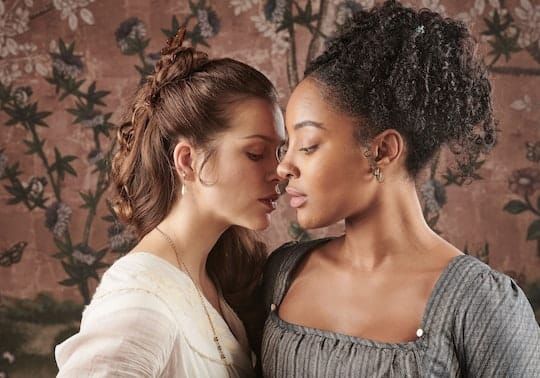
The Confessions of Frannie Langton is one of the most original period dramas you’ll watch this year. One part murder mystery, one part historical drama, and one part queer romance, it’s a series that touches on all manner of themes along the intersection of race, gender, class, and identity in a time of shifting political and social beliefs.
Based on the novel of the same name by author Sara Collins, the series follows the story of the titular Frannie Langton (Karla-Simone Spence), who is accused of murdering her former employer George Benham (Stephen Campbell Moore) and his wife Marguerite (Sophie Cookson), who was also Frannie’s lover. While circumstantial evidence points to her guilt, Frannie can’t bear to believe she would hurt “Madame,” whom she claims to have cared for deeply But Frannie also can’t remember what happened — thanks to the laudanum she’d been taking. A complicated story unfolds that wrestles with multiple philosophical and social issues; all made more complex by the fact that its heroine is a Black woman, precisely the sort of character we rarely see at the center of historical dramas, period mysteries, or Gothic romances.
“I grew up obsessed with books,” author Sara Collins tells Telly Visions. “And then for a period during my teenage years, obsessed with Gothic romances in particular — Wuthering Heights, Jane Eyre, all the Brontes essentially. I reread them every summer. But it was this gap that really troubled me — though I’d absorbed all this literature, nothing in that literature had anything to do with someone like me or where I was from. I mean, you could argue Jane Eyre nods at it, but from a completely different perspective.”