
'Firebrand' Isn't Angry Enough to Burn It All Down

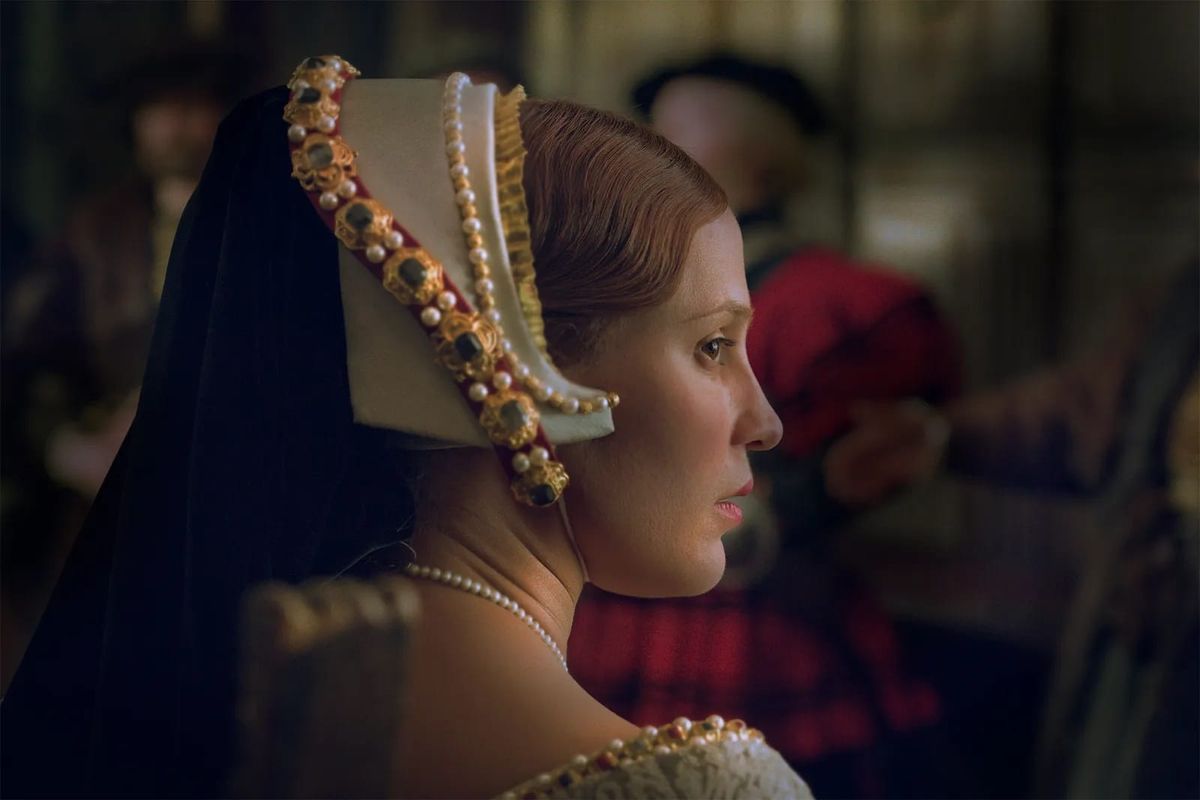
It looks like an absolute nightmare being married to King Henry VIII, not just because of the statistical likelihood of death or national humiliation, but because even when Henry was dying of ulcerated infection, you could still be considered a dangerous, threat-to-the-crown liability. Of all the fates experienced by Henry Tudor’s wives, it’s easy to think his sixth wife Katherine Parr got the best deal (rhyme reminder: she survived), but Firebrand, from Brazilian director Karim Aïnouz, is less interested in the favorable comparisons of history and more with the immediate, gnawing tensions of royal court life in the waning hours of Henry’s reign.
Based on the first book of Elizabeth Fremantle’s historical fiction Tudor Trilogy, Queen’s Gambit (not hard to see why they changed the name), Firebrand pushes us close to Katherine (Alicia Vikander) as her short spell as Regent-General ends with Henry (Jude Law) returning from war with France. Her appointment to rule in his absence proved controversial among Henry’s top advisors, with only a couple of nobles fully backing her, but the flames around Katherine truly start licking when Henry is back. She has been making unsupervised visits and pledging support for a female radical preacher, Anne Askew (Erin Doherty), who whips up peasants with promises of holy liberty. These indiscretions are preyed upon by Bishop Gardiner (Simon Russell Beale) to the point of life-threatening persecution.
Firebrand blatantly scandalizes the historical events of Katherine’s last weeks with her husband in ways that both entertain and ring hollow. But for all its invention, Aïnouz’s film is unambitious, happy to coast on serviceable pleasures of the royal court psychodrama without much precision. Still, Firebrand is all the better for its concern with the drab mundanity of Tudor life and the sharp, pus-filled agony of regressive gender roles.