'Miss Austen' Stages a Meet-Cute Worthy of Jane's Novels


The viewing experience of Miss Austen often feels like two completely different shows fighting under a blanket. There's the more pedestrian primary narrative, which follows the elder Cassandra as she attempts to protect her famous sister's legacy and reflects on her choices, primarily through her attempts to help her late BFF's daughter navigate life after her father's death. Then there's the show that exists in the flashbacks of this story, a bubbly, utterly charming (and extremely Jane Austen-esque) romance. The two halves of Miss Austen's whole exist uneasily next to one another, and perhaps that's why it's so difficult to figure out precisely what this show is trying to say.
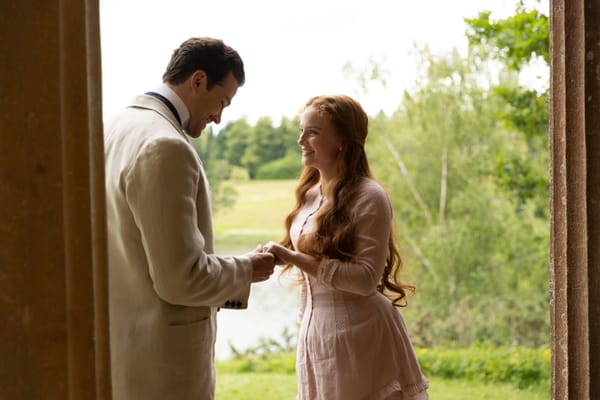
On one hand, there are heavy-handed social and political metaphors: Unmarried Cassy is exploited by her in-laws for childcare services. Isabella is forced to give up the family's china because her brother is set to inherit it. On the other hand, there is dreamy, trope-filled joy: Cassy's grief begins to heal thanks to her sweet meet-cute with the dreamy and hilariously named Henry Hobday (Max Irons). The tonal imbalance is more than a bit striking, particularly as Cassandra's mission to hide her sister's letters continues. Though she seems to be making decent enough progress through the backlog of Jane's correspondence, it's still incredibly unclear what's so dangerous in these missives.
There's a better version of this series that picks a lane: the bubbly, frothy rom-com that seems to serve as a template for so many of Jane's feelings about romance or the more dour drama that attempts to wrestle with issues of female autonomy more realistically. And either on its own might be better than this one, which clumsily attempts to do both and is only partially successful.