Our First Look at Netflix's 'Joy' Proves That Sometimes Even Miracles Need a Little Help

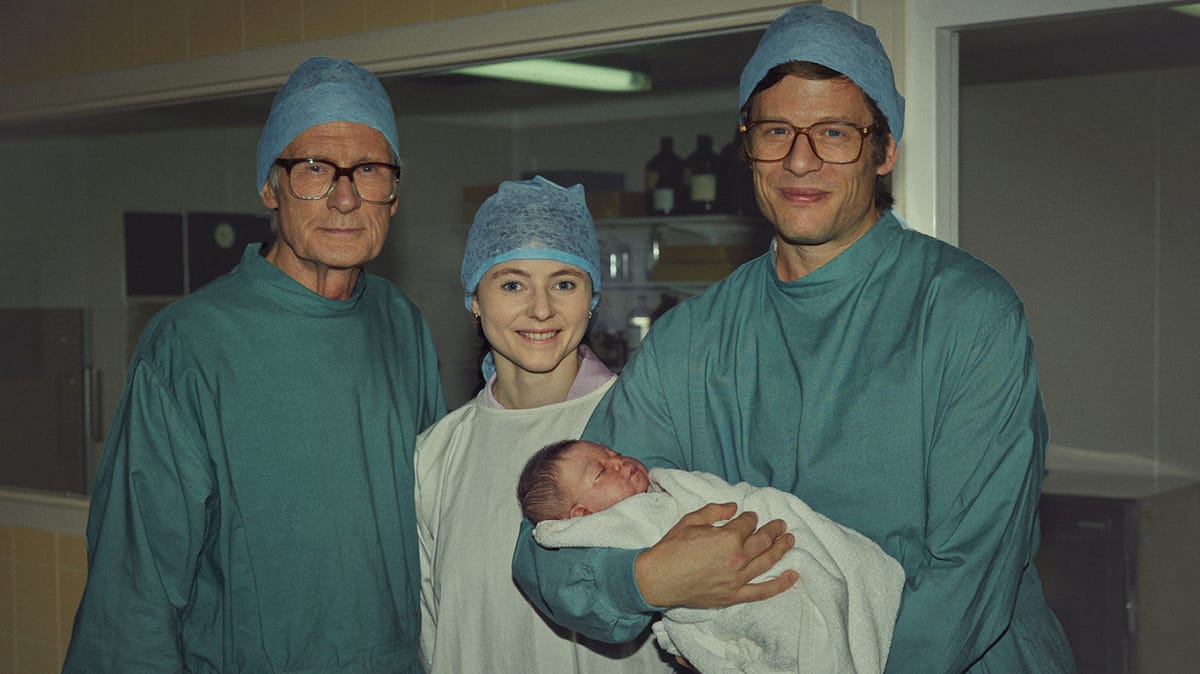
Sometimes even miracles need a little help. That's the basic premise of Joy, a Netflix film that chronicles the story of three people who worked together to bring one about: The birth of the first child conceived via the process that would become known as in vitro fertilization.
For those who aren't aware, the process of in vitro fertilization was actually pioneered in Britain, by obstetrician Patrick Steptoe, biologist Robert Edwards, and nurse Jean Purdy. Thanks to their groundbreaking work Louise Joy Brown, the first test-tube baby, was born on July 25, 1978, in Lancashire. Her parents had been trying to conceive naturally for the better part of a decade, but her mother, Lesley faced complications from blocked fallopian tubes. Edwards was awarded the 2010 Nobel Price in Physiology or Medicine for his work on the development of in vitro fertilization; sadly, Purdy and Steptoe, who passed away in 1985 and 1988 respectively, were not eligible for consideration as the award is not given posthumously.
Their collective work has been lauded as one of "the most remarkable medical breakthroughs of the 20th century" and the film's arrival could hardly be more timely, what with the recent court case in Alabama that has threatened access to the procedure for all of the state's residents (and could be seen as a precursor for further restrictions nationwide).