'Outlander's Framework Holds Across Eras in Season 8
The 'Outlander' Season 8 premiere, “Soul of a Rebel,” was dismaying, but Episode 2, “Prophecies,” holds real promise for the final season's overall arc.

What though the sea with waves continual
Do eat the earth, it is no more at all …
Nor is the earth the less, or loseth aught,
For whatsoever from one place doth fall,
Is with the tide unto another brought
For there is nothing lost, but may be found, if sought
- Edmund Spenser, Faerie Queene 5:2:39, lines 4-9
Spenser’s emblematic lines express what may be taken as the moral or metaphysical idea made concrete in the movement of the Outlander characters between the late 18th and 20th centuries. One era intersects with another as the same character walks (or runs or drives) through the same space at different points in time. Material things of emotional and practical use or purpose serve a different purpose in another era and/or place. Scattered ruined buildings, arches, and gravestones underscore the central fantasy (or fallacy) of Outlander: that certain people can travel in time and meet people they knew who recognize them in both the two (now three) eras. We see early in Season 7, in 20th century Scotland, Brianna walking with her two children through an old gateway in the form of an arch near Lallybroch, into an old graveyard, said by her son, Jem, to contain the remains of her father, his grandfather, James Fraser, and his gravestone.
This first time, the lighting is daylight, background music light, if a little sad, because we are in the realm of historical realism; Jem is taking his mother and sister, Mandy, to where he built a small cairn and placed it on a stone as a marker to commemorate his grandfather’s existence long ago. Later in Season 7, she approaches the arch-gateway again, as she makes up her mind to return to 18th century North Carolina with Roger and their children. She walks in the twilight; the background music is ritual in feel, and the same gate is now all aglow. The camera cuts away as if in respect: we are not to share Brianna’s supernatural experience of the graveyard in an 18th century light (in all senses of the word), which perhaps prompts Briana to return to the past one last time, now for good.
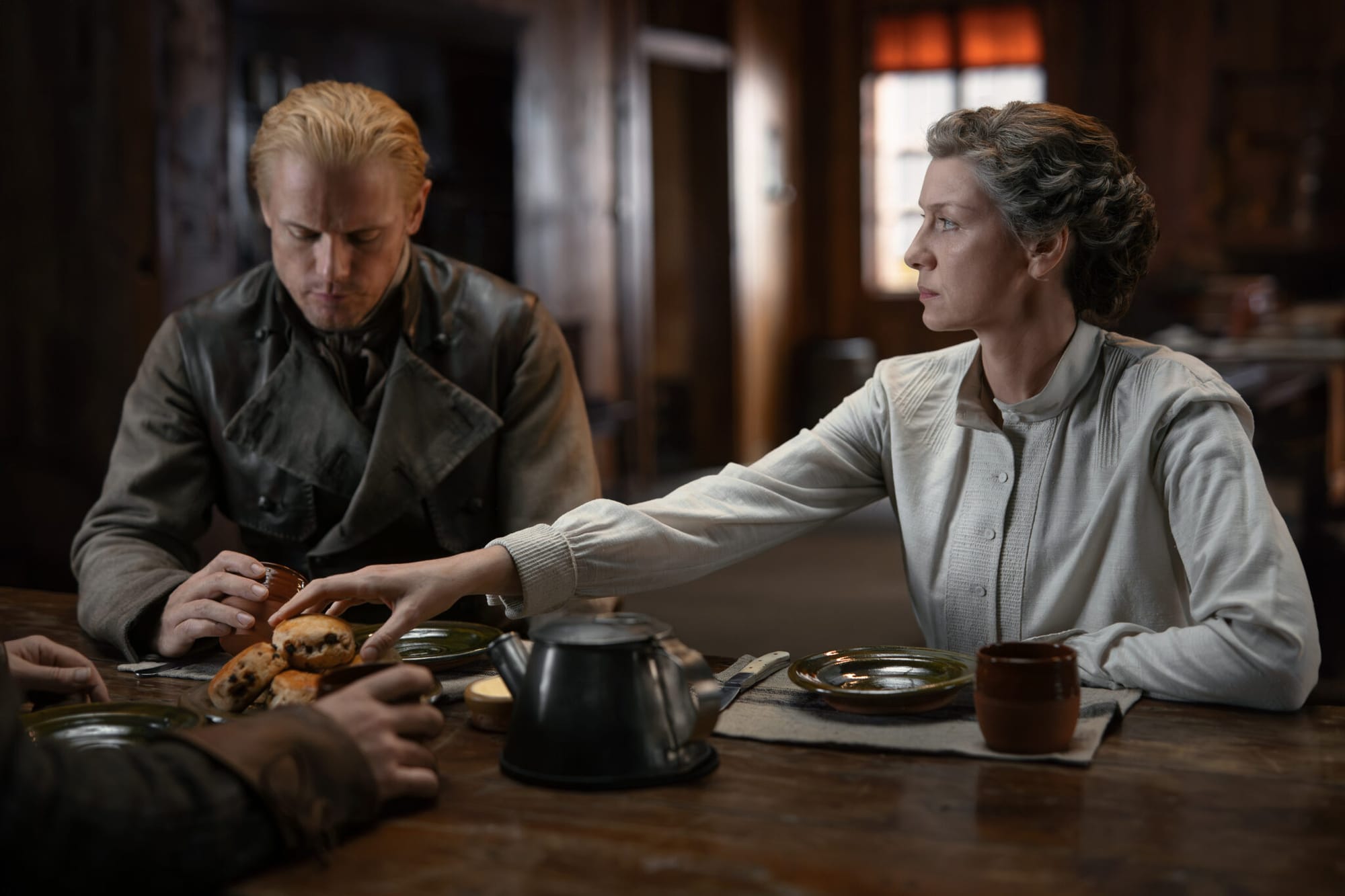
Small things (relics, books, letters, etc) are important because they serve as fragments of historical experience. What’s recorded in the documents and letters is read by characters in the present time when they find them in centuries-old containers of various sorts. In the 20th century, Brianna finds Claire’s letters to Brianna, written in the 18th century, and reads them aloud. Early in Season 8, Jamie reads on the flap of The Soul of a Rebel by Frank Randall, a gift Brianna carried from the 20th century through the stones to the 18th. Only we hear the voice of Tobias Menzies, but Jamie is disconcerted to learn for the first time how closely the sadistic English Captain Black Jack Randall resembled the scholarly, gentle Frank, Claire’s first husband.
(Jamie must’ve used the index because he quickly knows he is mentioned 14 times and sees the date of his death, which unnerves him.)
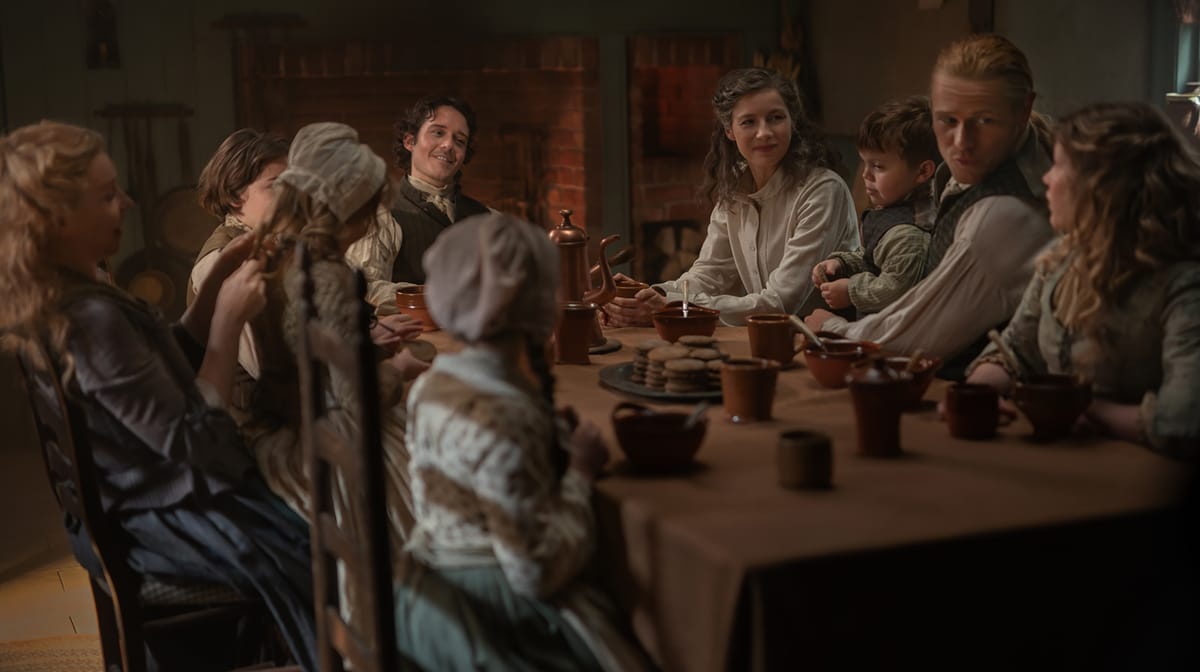
In the Season 8 premiere, “Soul of a Rebel,” Claire and Jamie also realize that their first child, Faith, may not have died after the early parturition more than twenty years before in Paris (S2:E7, “Faith”). When they reach Fraser’s Ridge, they are shown the house Ian built as a replacement for the one that was burnt down last season, and Fanny, Faith’s child, is shown a “room of your own” (surely an allusion to Virginia Woolf’s famous polemic). Claire says, considering “all we have lost,” she wishes Fanny could remember her sister, Jane. Jamie replies, “Don’t press her” with words whose meaning echoes and personalizes Spenser’s lines.
Fanny’s memories are probably painful, and instead of grieving over the possible (probable) wretched, lonely, beaten childhood she endured, they are free to “think” differently. Given who she was married to after she escaped from a brothel, she must’ve reached a respectable (Jamie hopes), more than endurable life.
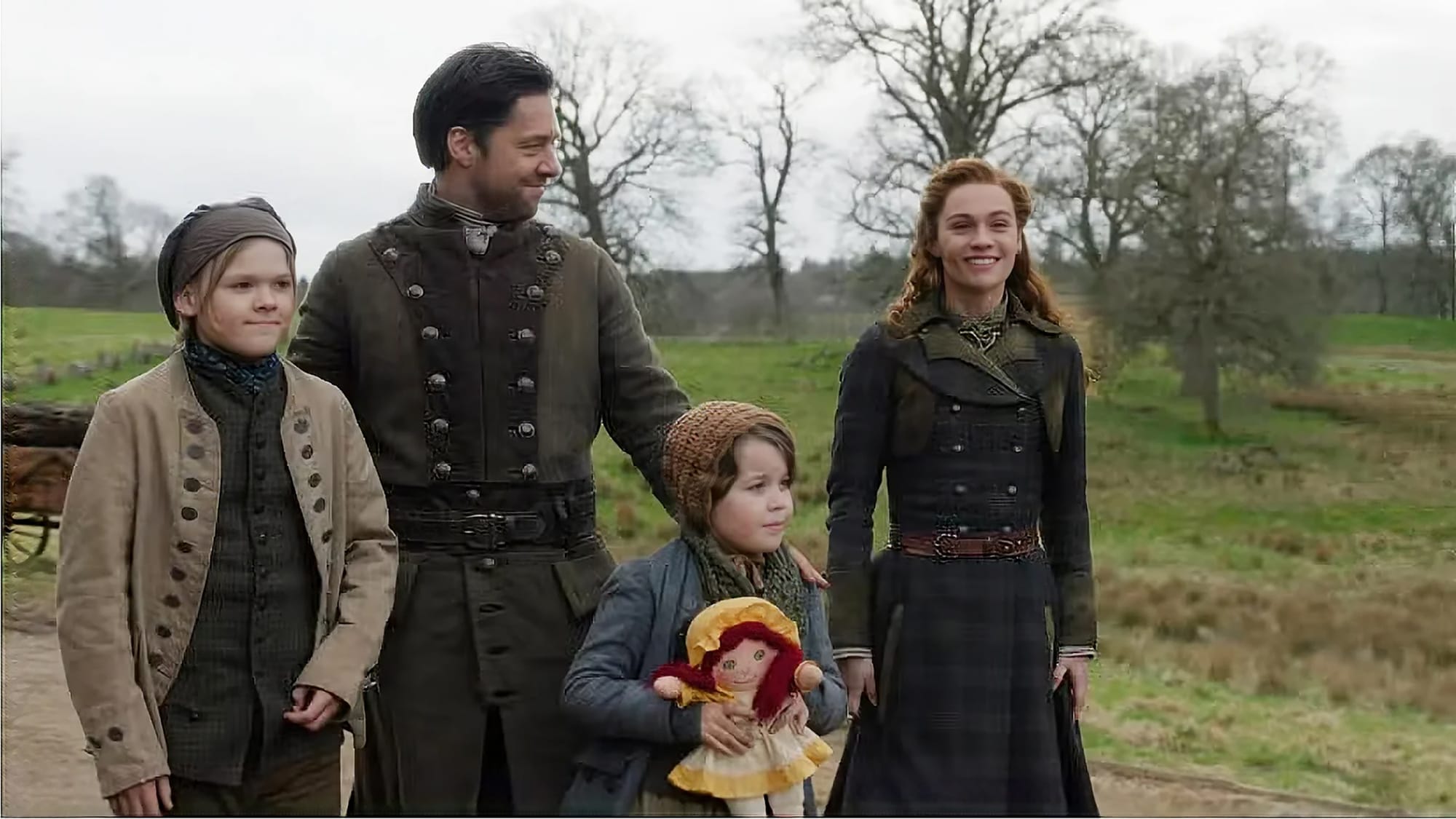
I focus on these scenes because they recur and are central to what makes this period drama so effective, both as authentic history and a time-slip narrative fantasy. The series embeds things we recognize from our lives or have seen in museums, so the strangeness of another time becomes something we are at home with. Scenes need not occur on real locations: much of Outlander Seasons 4 and 5 were filmed in Scotland (not the U.S.); for Season 3, the crew and cast traveled to South Africa, which has deep ports for filming tall 18th century-looking ships at sea.
The most striking objects reveal how this story is woman-centered, yet endorses violence as an acceptable way of teaching, as alluring, laced with a strain of sadism. In 1945 (Season 1), Frank Randall’s cutthroat razor blade, inherited from his ancestor, Captain Jack, used by Claire, shows her exerting sexual power over Frank. Jack wields the same instrument in the 18th century to shave a subordinate who has dared to show silent disapproval of the captain’s menacing treatment of Claire.
Mothers and daughters, sisters, women friends, mentors, dialogues we so rarely see or hear in other films are commemorated. Two lovely carved ivory bracelets that Jamie Fraser’s sister, Jenny Murray, gives Claire, Jamie Fraser’s new bride, to make visible their bond, turn out to carry deep resonance. They were originally a pair of boar tusks carved by Jamie’s present godfather, mentor, and close friend, Murtagh Fitzgibbons Fraser, into arm bands, as a love gift years ago to Ellen Mackenzie (Jamie Fraser’s now-deceased mother).
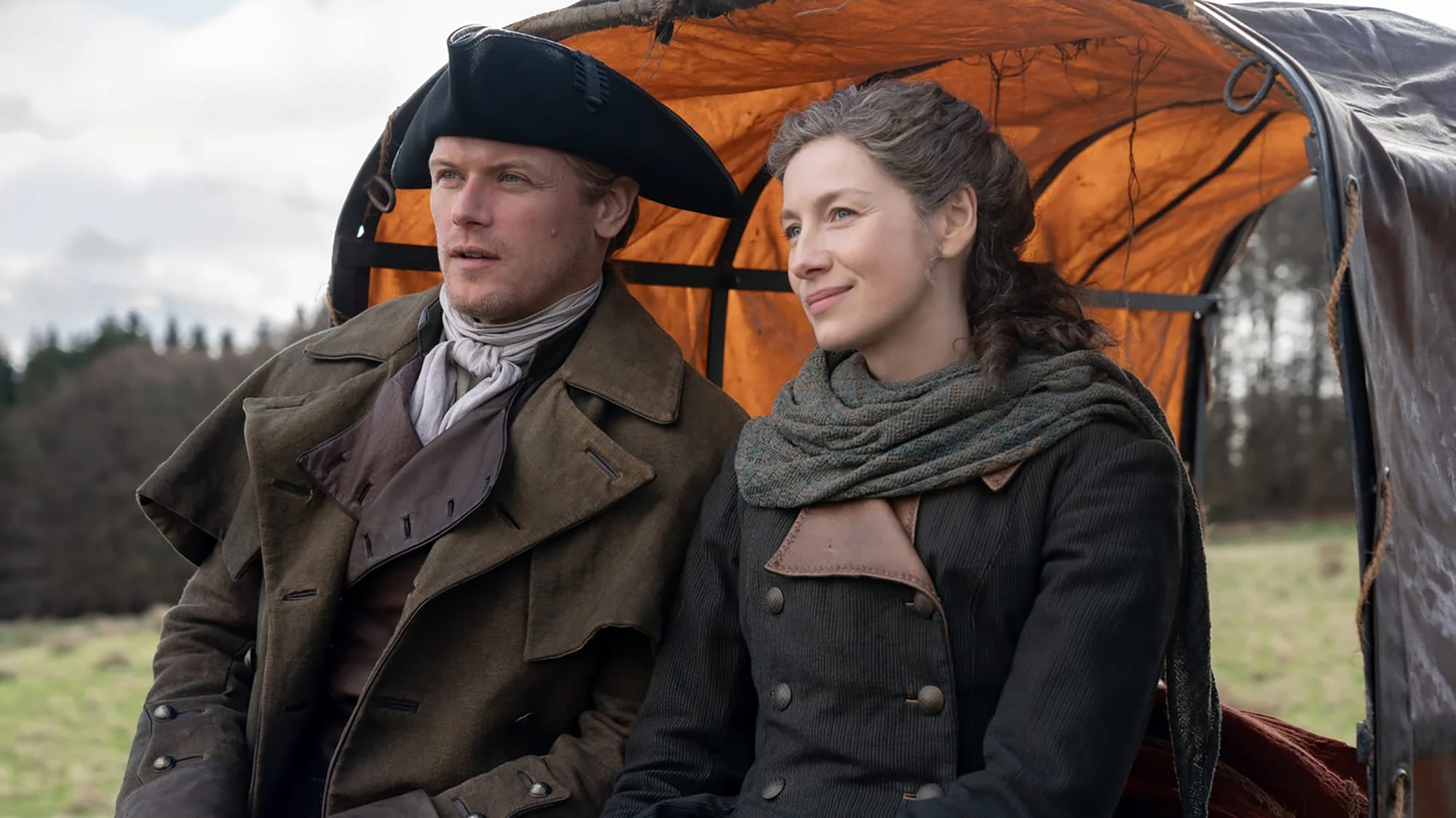
All this said, “Soul of a Rebel” was dismaying. The filmmakers made elementary errors, like failing to prepare for an event and then having characters overreact. (I wouldn’t want to count how many times Claire cried over Faith.) There was the ferocious stabbing of a criminal trafficker of young women, whose story was both over-coincidental and too contemporary. The time given over to Fergus, Marsali, and their brood, life as printers of seditious pamphlets in Virginia, competed with the inadequate recurrence of Roger and Brianna and a momentous decision to return to the 18th century permanently. (Also: since when is being heavily pregnant an unqualified cause for joy?) Ian’s complicated past is given a passing glance in a second-long appearance of his Native American ex-wife, and of his present pacifist Quaker wife, Rachel.
I wondered if the makers of this Outlander show had not wanted to be closed down. Names of writers familiar from the early seasons (Roger Moore, Tony Graphia), as involved, made me think: these people don’t want to let go of anything.
The secondary story of this episode is that of Jamie’s son, William, struggling to forge an identity for himself, with Lord John Grey unable to mentor him properly. The opportunity to introduce an unattached, pretty widow and son, ready-made for William, was not resisted. I didn’t blame him for not believing she is who she says she is. The ostensible theme of the hour – restoration and reunion – didn’t work here.
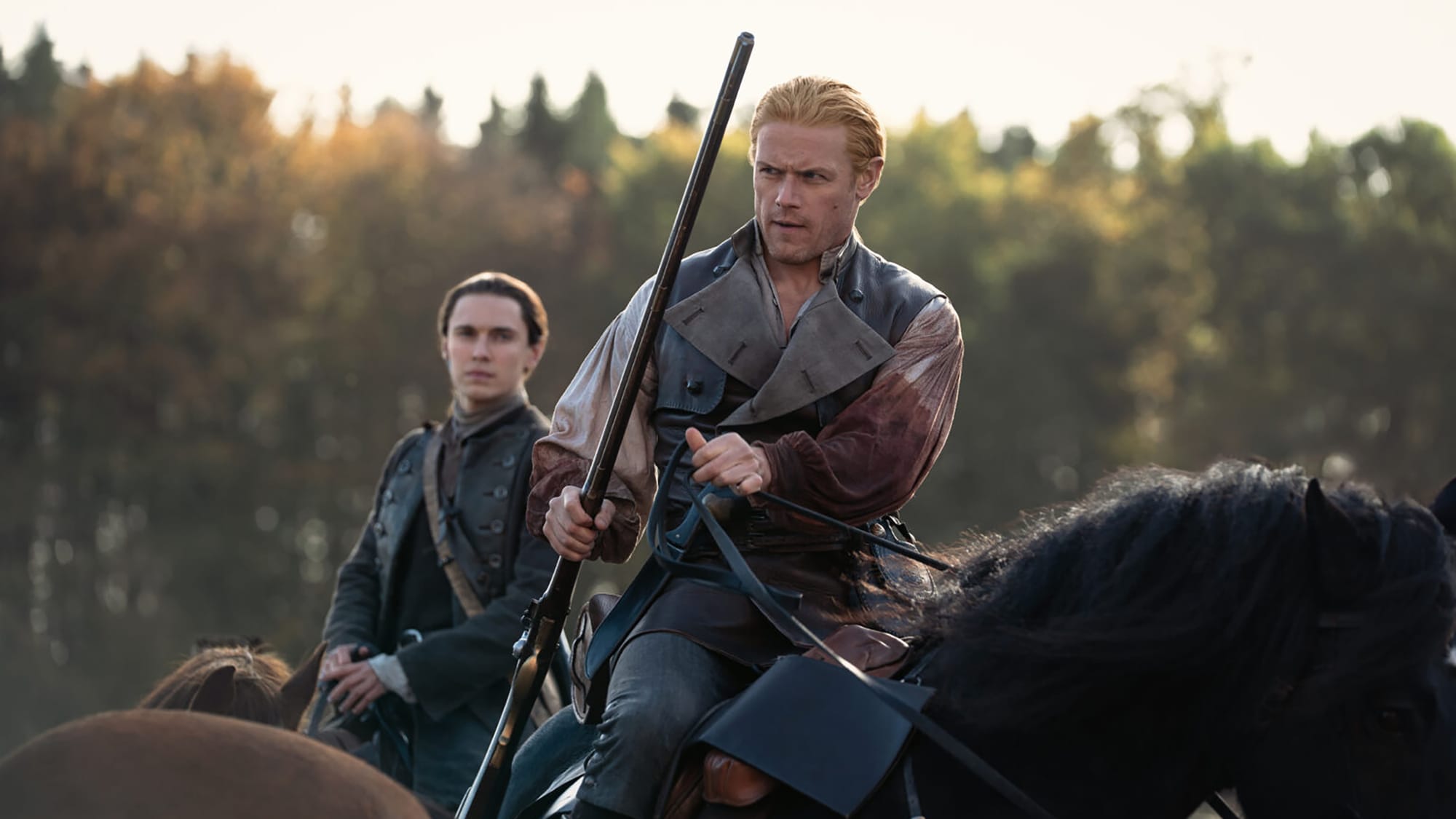
Episode 2, “Prophecies,” brought grave themes of death from violent attack. (Amy McCallen, the wife of Evan Lindsay, whom we first met in Season 3, is ferociously clawed to death by a bear, reminding me of the onslaught wreaked on Claire and the graphic candour of S5:E11.) The longer scenes, like Claire teaching Fanny biology through a microscope, brought back the experience of Season 6, a meditation on depression, grief, and permanent loss. We were back in the effective territory of Diana Gabaldon’s An Echo in the Bone, functionally a coda to Season 7.
E. M. Forster is unusual for making “prophecy” one of the sine qua non elements of fiction (Aspects of the Novel), done in a spirit of humility to make whatever the voice of the future decrees acceptable. Humor has no place here. I hope that whatever fantasy vision this ends on will be adequate. Season 5 had a flashback, a sequence of scenes anticipating Jamie and Claire’s later years (S5:E5, “Perpetual Adoration”), where in Boston, 1967, Claire goes to church after the death of Frank, and she and Brianna decide to go to Inverness. They meet Roger Wakefield, engaged in arranging an adequate funeral for his stepfather, the Rev. Reginald Wakefield (played beautifully by James Fleet). Brianna learns the history of her parentage; Claire decides to return to the past. Passages of prose in these scenes (S5:E12, “Never My Love”) match those of the mesmerizing ones by Gabaldon.
If the writers continue what they began to slowly build in “Prophecies,” we may end in the ghostly-gothic terrain of the long-gone yet joyful that the books evoked.
NB: I am much indebted in this recap to Martha Bowden’s Descendants of Waverley, 2016; and Madeleine Pelling, Rosie Wain, “The Material World of Outlander: Objects through Time,” 61-63, (Spring-Summer 2022), The Eighteenth Century.
Outlander Season 8 continues with new episodes on Fridays on Starz through the beginning of May 2026. Seasons 1 through 7 are available to stream.

Sign up for full access to Telly Visions' recaps and reviews!