'The Outrun's Story Doesn't Live Up to the Transcendence of the Locale

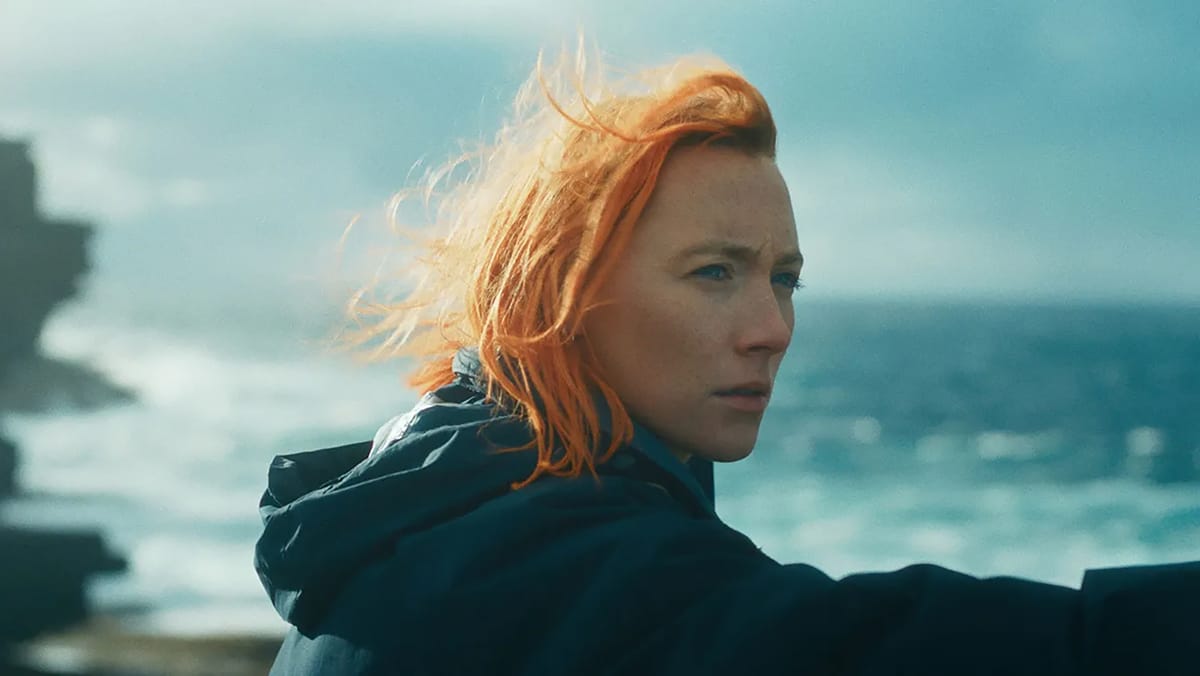
It feels like it’s been ages since we’ve seen Saoirse Ronan at the center of a naturalistic, contemporary drama, and her immersion in the self-destructive and self-loathing tendencies of Rona, an Orkney-raised alcoholic who returns to her remote Scottish island home, is what keeps The Outrun afloat in its choppy stretches. The film adapts the memoir by Scottish writer Amy Liptrot and sticks closely to the details Liptrot lays out there: Rona was raised in Orkney by her English parents; her father Andrew (Game of Thrones’ Stephen Dillane) is bipolar and schizophrenic; post-separation, her mother Annie (Slow Horses’ Saskia Reeves) turned to Evangelical Christianity; Rona lived in London for ten years, where her alcoholism ruined relationships and endangered her safety.
But picking up life back on the Orkney Islands – isolated, bracing, quotidian – isn’t the cure-all solution to addiction one might think. Rona is lonely, starved of contact with young people like herself, and all the people her age still on the islands are married, Christian, or boring (or some combination of the three). The severity and unpredictability of her father’s illness cut her off from a lasting, reciprocated relationship with him; she can’t shake the feeling that her mother is always judging her.
Central to The Outrun is the idea that isolating yourself in nature does not necessarily feed the soul, and feeling lonely inside a tight-knit community is like being stuck in a prism of alienation, acutely aware of your own condition—and hating yourself for it.