
The BBC & PBS Release First Look at 'Walking With Dinosaurs'

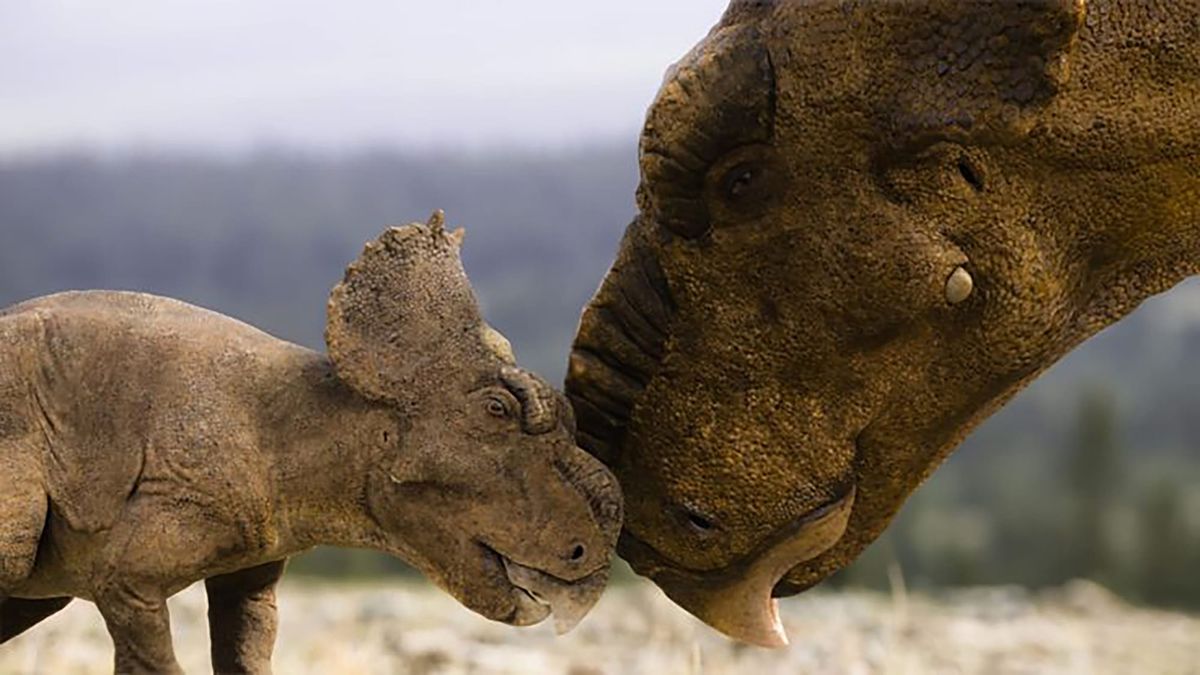
Those old enough to remember the last century may recall 1999's Walking with Dinosaurs and the controversy surrounding its release. An early instance of using what was at the time state-of-the-art computerized graphic images (CGI) to illustrate scientific discoveries, Walking with Dinosaurs was derided as trash and the first step by the BBC and U.S. broadcaster/co-producer Discovery away from their missions as factually based networks. (Though the network changed its name from The Discovery Channel to Discovery in 1995, it was still the home of science-and-nature-focused programming, having not yet gotten into red-state-coded reality fare.) Despite massive ratings, three Emmys, two BAFTAs, and a Peabody, critics viewed the series as somehow unwholesome; the BBC and Discovery betraying science and real-world-based archeology for sensational CGI dinosaurs like this were Jurassic Park, precisely the sort of programming PBS would never stoop to broadcast.
It's a quaint reminder of how much our TV landscape has changed in the last quarter century; nowadays, Discovery has no interest in co-producing something with actual science behind it. (Considering the company handed the entire DIY Network to the fundamentalist Christian couple, Chip and Joanna Gains, to remake in their own image, one assumes there are concerns in declaring dinosaurs "real.") Meanwhile, PBS is all over being part of the show's revival, with both Germany and France's public broadcasters boarding it as well.
The first images from the series are now out, and CGI has come a long way since the 1990s. So has dinosaur research, with the first images including a family of Pachyrhinosaurus lakustai, one of three known species of Pachyrhinosaurus. They kinda look like Triceratops and are plant-eaters with a thick slab of keratin-covered bone over their nose, known as a boss. The other is the Albertosaurus, a small but deadly feathered relative of T. Rex; feathered dinosaurs have only been confirmed since 2000, as science found preserved fossil evidence of feathers gracing related species.