'The Wonder's Best Moments are Those Rooted in Mercy

The first reactions I heard about The Wonder, the new film from Sebastián Lelio (Disobedience, A Fantastic Woman), initially puzzled me. “Why does it start and end like that?” Immediately you get the confusion; the film begins and closes on a soundstage, pushing into and pulling out of a constructed set filled with actors, bookending the religious drama with Brechtian calls to the film’s fictionality. The point becomes clear through narration; like stories, faith is predicated on a requirement to believe the reality of something that defies rational thought.
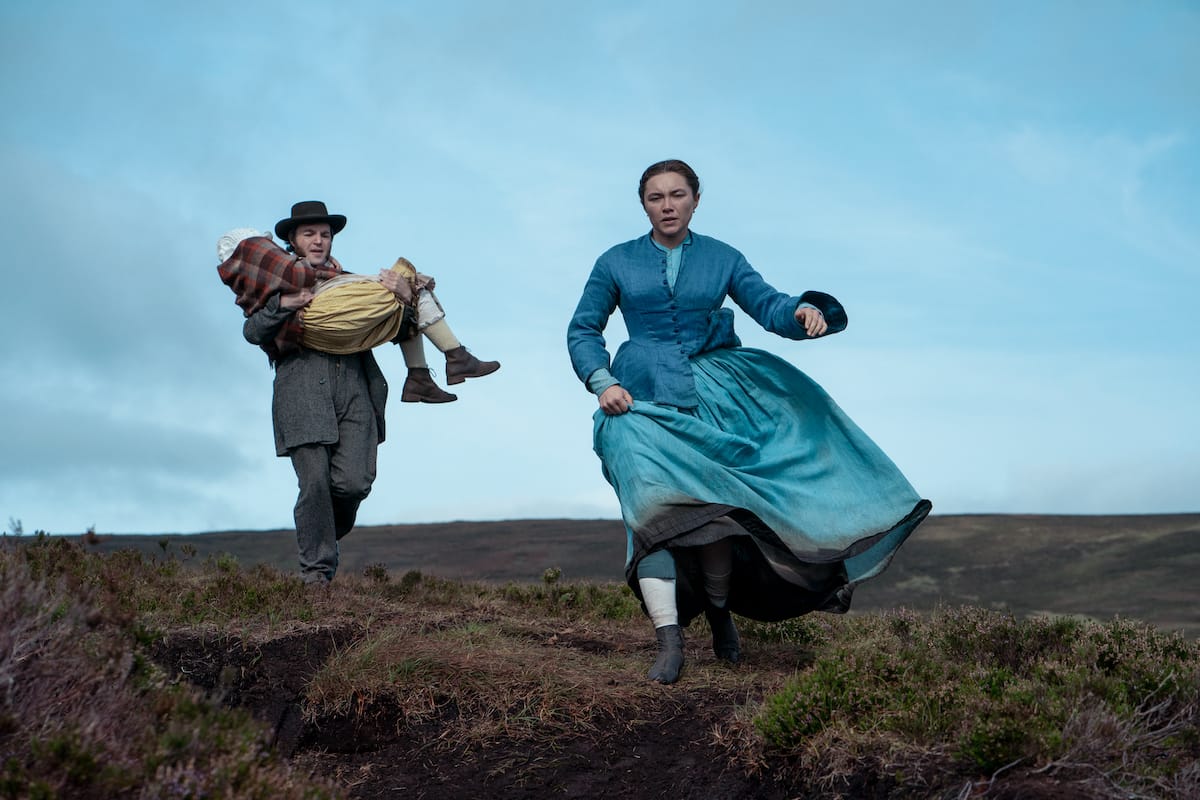
It’s a solid, if underdeveloped, parallel between the audience and protagonist Lib Wright (Florence Pugh), an English nurse who’s pitted against a staunchly Catholic Irish community when she arrives to ascertain the cause behind a young girl’s miraculous four-month hunger fast. This context is crucial; a child is surviving without the need of food in the years after the Great Famine, and an Englishwoman comes bearing intentions to force-feed an Irish citizen if needs be — both these factors are extremely loaded with the slightest knowledge of Irish history.
If the religiosity of rural Ireland rises en masse against Lib, she finds two unlikely connections; a similarly skeptical journalist William (Tom Burke) looking, and, strangely enough, the miracle child herself, Anna (Kíla Lord Cassidy). The two women are playful with each other’s names, sharing a cautious camaraderie Lib doesn’t have with any medical or spiritual experts in the community. The most interesting break-out child stars are undoubtedly the ones who debut in films that feel dark or strange, and Cassidy is no exception – she performs like Anna with a healthy mix of mysticism and hauntedness, terrified of the implications of her situation but aware of the power she holds by keeping secrets.