Acorn TV's 'The Big Bread Experiment' Proves That Baking Can Bring a Community Together

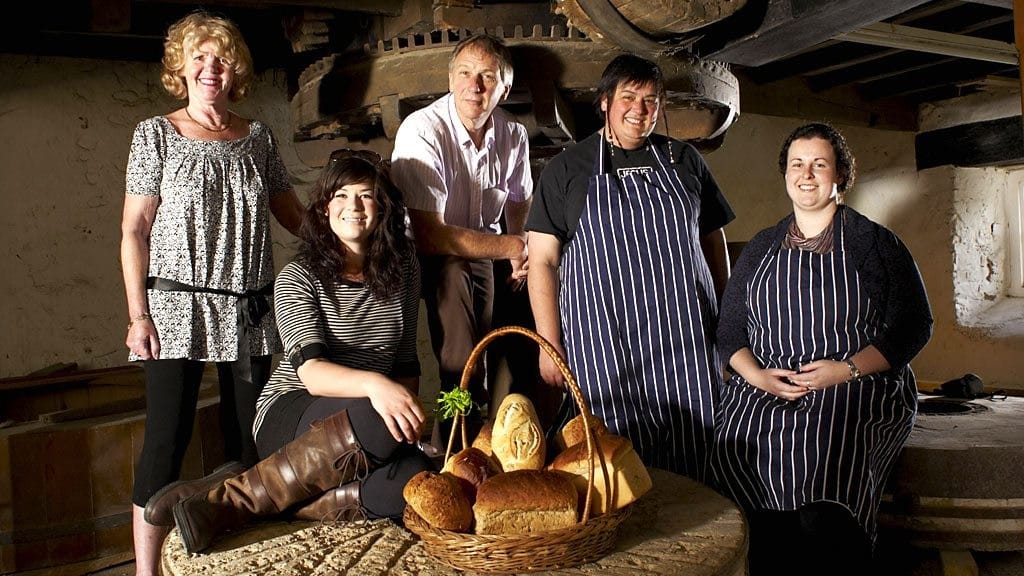
Over ten years ago, Church of England Curate Cath Vickers (do you see the pun there?) was concerned that her small, Darrowby-like town of Bedale, Yorkshire, was losing its sense of community. People no longer had real contact with their neighbors, and she yearned for the days when a common purpose drew people together. So she started a baking group. The original group consisted of a motley band of women—including a teacher, motorcycle enthusiast, midwife, and physiotherapist, as well as older women who’d never had careers outside the home. Their enthusiasm for getting their hands in dough triumphed over their hilarious incompetence. The wine helped, too. It was a roaring, mostly edible, success. But it planted the idea that maybe their skills could improve, and other people might enjoy, eat, and even pay for the bread. And thus, The Big Bread Experiment was born.
A couple of artisan bakers, Duncan Glendinning and Patrick Ryan, who run a successful business in Bath (250 miles away, and that’s a long drive in England) are persuaded to help and to introduce them to the real world of baking. The two professionals gracefully accept the slapdash approach of the group, barely blinking when a question about how long a batch of dough had been rising is answered with “About two glasses of wine.” They do, however, suggest that a “dollop” is not a valid food measurement. But Patrick and Duncan sense that underneath the silliness and jokes, the women are becoming passionate about breadmaking.
Plans are made to develop several recipes that can be presented, not for sale, but to be tasted, at a nearby food festival. It’s a great success, giving the women, or the Kneady Girls, as they’ve named themselves, another boost of confidence.