
Dark Comedy 'Big Mood' Has Big Laughs & Even Bigger Feelings

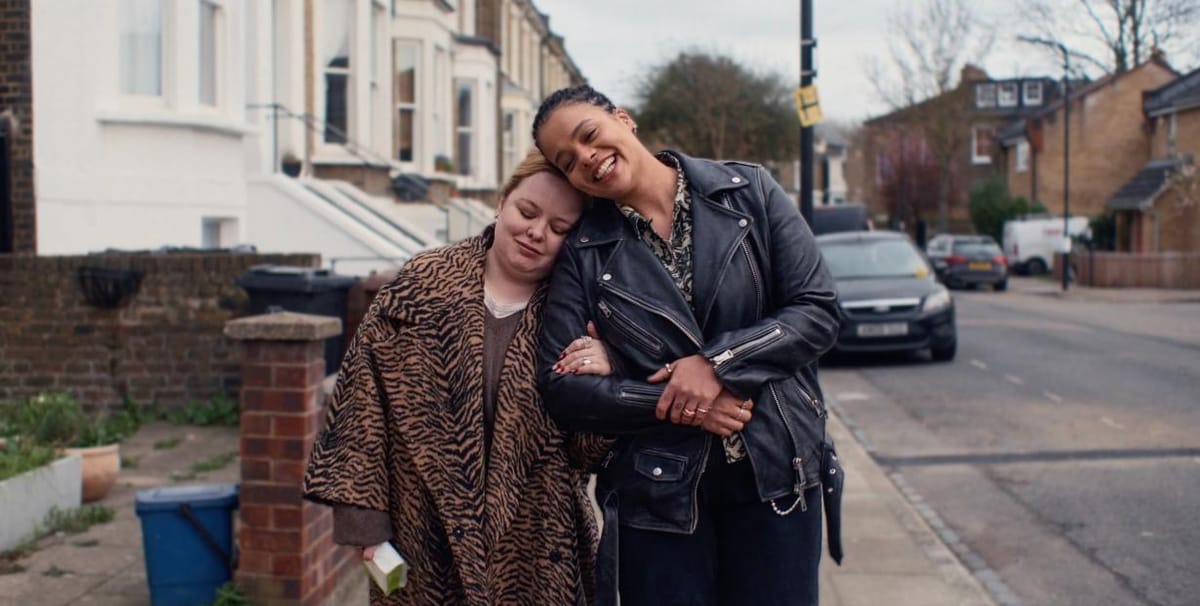
When a show opens with a montage of Nicola Coughlan glamorously riding an electric scooter through East London set to hyperpop, you know that show is about to be two things: 1) incredible, and 2) made by and for the Gen Z/millennial audience. Thus goes the opening sequence of the dark comedy series Big Mood, starring Nicola Coughlan (Bridgerton) and Lydia West (It’s A Sin). Created by playwright Camilla Whitehill (Porters), Big Mood follows Maggie (Coughlan), a struggling playwright with bipolar disorder, and Eddie (West), Maggie’s best friend and an equally struggling bar owner, trying to keep Maggie from veering off course.
Despite what the premise and promotion of the show might suggest, this is not a goofy comedy in the vein of Girls or Broad City. In tone, it’s a lot like another dark comedy we covered last year, Such Brave Girls. Episodes alternate between hijinks peppered with the struggles of mental illness and stark portrayals of mental illness peppered with uproarious one-liners.
Coughlan and West’s charm makes the show’s emotional whiplash work. Despite often acting like the worst people in the world, both characters are still entirely lovable, primarily thanks to the love they show each other. (Full bias here; they’re two of my favorite actors, and I would gladly watch either of them read the ingredients list on a can of baked beans). Coughlan plays Maggie’s mental health struggles with nuance, and West’s deadpan delivery shines from the show’s most laugh-out-loud lines to its most gut-punch heartbreaking moments. Though Eddie may appear on the surface as the comedic “straight man” and anchor for Maggie, the show beautifully portrays how friendship amidst mental illness isn’t one-sided dependency or caretaking. Maggie and Eddie rely on each other, hurt each other, and heal each other equally.