‘Downton Abbey’ Season 3 Claims Its First Victim
When tragedies strike we try to find someone to blame and in the absence of a suitable candidate, we often blame ourselves.

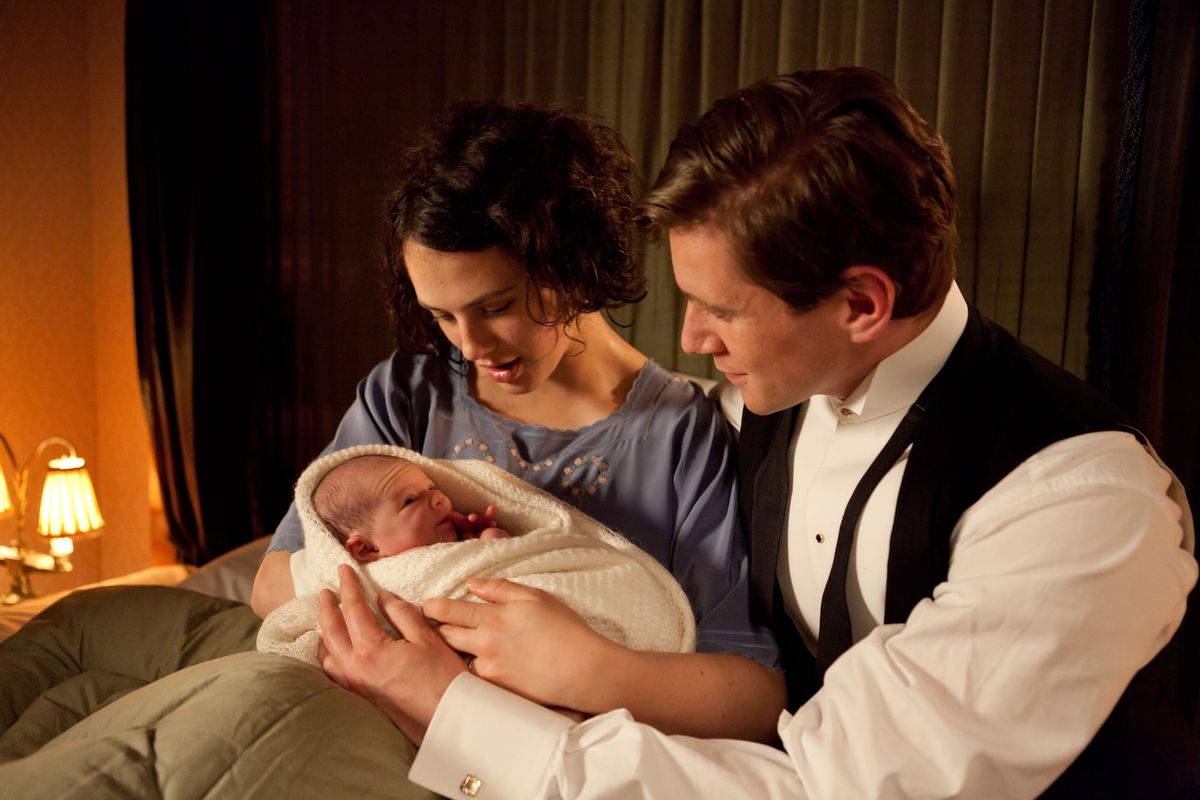
The midpoint of Downton Abbey’s third season includes what is possibly one of the most harrowing storylines ever depicted in the world of period drama. Sybil Crawley Branson’s death comes as a shock to most of us, landing like a thunderclap in the middle of a midseason installment that seemed as though it would tiptoe right up to the edge of tragedy, but never really step over the line. Well, in the end, it doesn’t so much step as barrel, giving the series’ most unabashedly good character a brutal, horrifying end.
Jessica Brown Findlay deserves no end of praise, because Sybil’s death is visceral and ugly, and can’t possibly have been easy to film. As the youngest Crawley daughter convulses and struggles for breath in front of her entire stricken family, who has essentially crammed into her bedroom to watch her die, it’s shocking in a way that we rarely witness on period dramas like Downton.
Death, on a show like this, tends to look a lot more like Lavinia’s last season — a wasting sickness, a vaguely identified respiratory illness, something bland that doesn’t actually look like it hurts too much. It’s a quiet, tragic affair that’s certainly sad, but hardly ever violent. There’s a dignity to the process, which is perhaps why the way Sybil dies is genuinely so shocking. It’s simply not supposed to be like this.