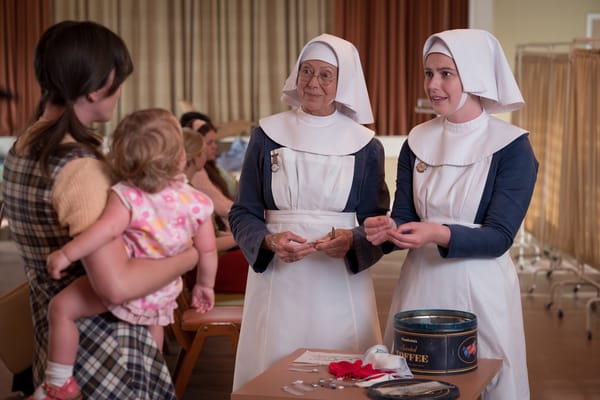
'Sister Boniface' Doesn’t Need “Killer Heels” to Bring Killers to Justice

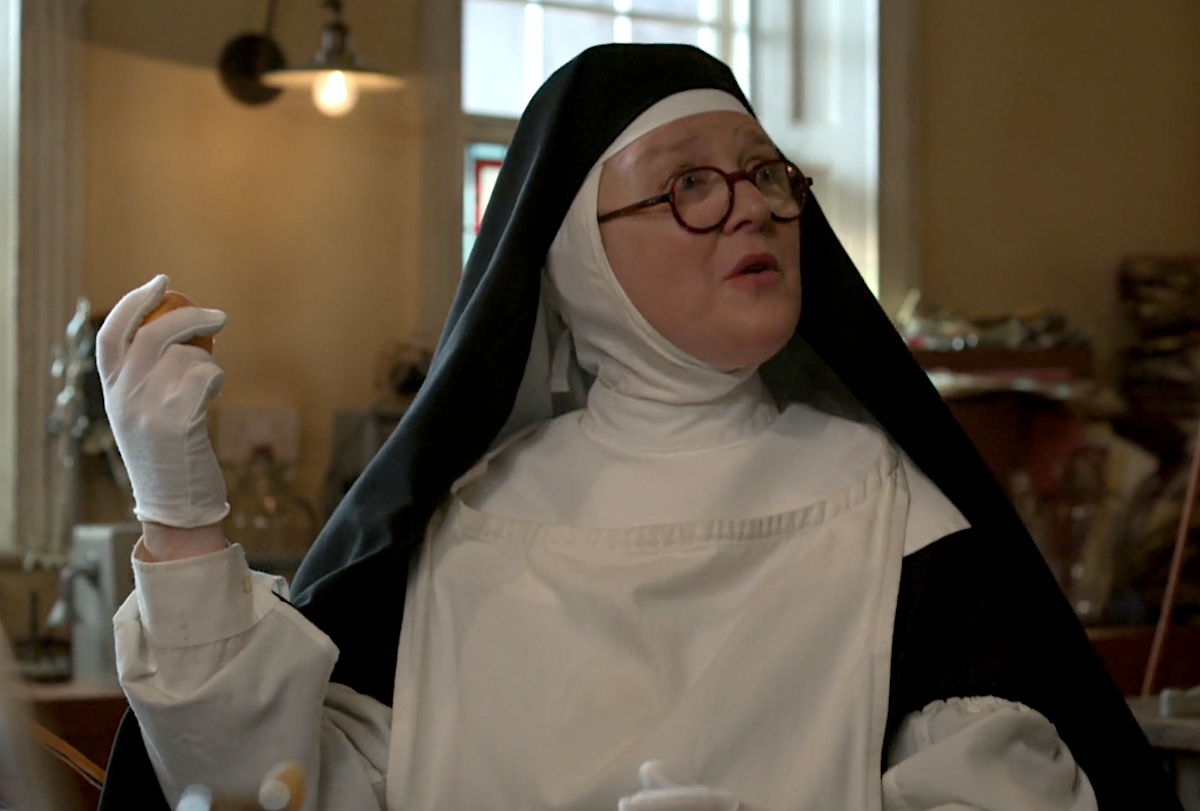
Even sleepy rural Great Slaughter experiences the cultural explosion of the 1960s – wild colors, outrageous styles, daring music, feminism, and industrial unrest have arrived for Sister Boniface Mysteries. The opening sequence of Season 4's episode "Killer Heels" features a dolly bird (to use the contemporary vernacular term) who prances around to groovy music in some highly impractical boots and a tiny dress. It’s the promotional effort of the Millington Shoe Factory, which is introducing cutting-edge fashion to customers who, until recently, probably demanded staid, sensible shoes. The 1960s were marked by both silliness and the emergence of serious, far-reaching issues, such as women’s and workers’ rights.
The owner of the factory, Arthur Millington (Peter Wight), aided by his nephew Dermot Millington (Joshua James), plans a grand launch in a few days of his new, incredibly trendy product, the BoHo Boot, aka the coolest kicks in town. Reporter Norman Whalley, once again on the search for the story of a lifetime, visits the factory to interview Arthur, who announces that the grand launch is taking place early next Saturday.
But after Norman exits, Arthur tells his all-woman staff that finances are tight and they’ll have to work extra hours without pay to meet the deadline. They’re not pleased, and Dermot tells his uncle that the women, led by Bernice McDowell (Dani Moseley), are complaining. He’s unfriendly toward the workers, whereas his sister Pamela (Grace Molony) gets on well with them. But when Pamela, an art student, comes to the factory, she sees her uncle has borrowed some of her artwork for his graphics for the new boots, and is infuriated.