‘The Count of Monte Cristo’s Finale Brings Us “The Last Two”
In the end, vengeance is Edmond Dantès's
In the end, vengeance is The Count of Monte Cristo’s, as the series wraps up by bringing Edmond Dantès’s complex campaign of personal payback to a close, and mostly, it works. At this point, it’s obvious that the show isn’t interested in delving deeply into the nuances of the story it’s telling and has offered only the most surface-level details about its characters. But, hey, at least a couple of dirtbags face some serious public humiliation (and jail time!). That’s nothing to be sniffed at.
The show’s final installment has plenty of ground to cover, with two of Edmond’s primary revenge targets still at large. Unfortunately, because the actual vengeance part of this story didn’t really kick into gear until last week, a lot of the payoff we’ve been waiting to see ends up feeling rushed and rote, as if the show’s ticking down a checklist of last revelations.
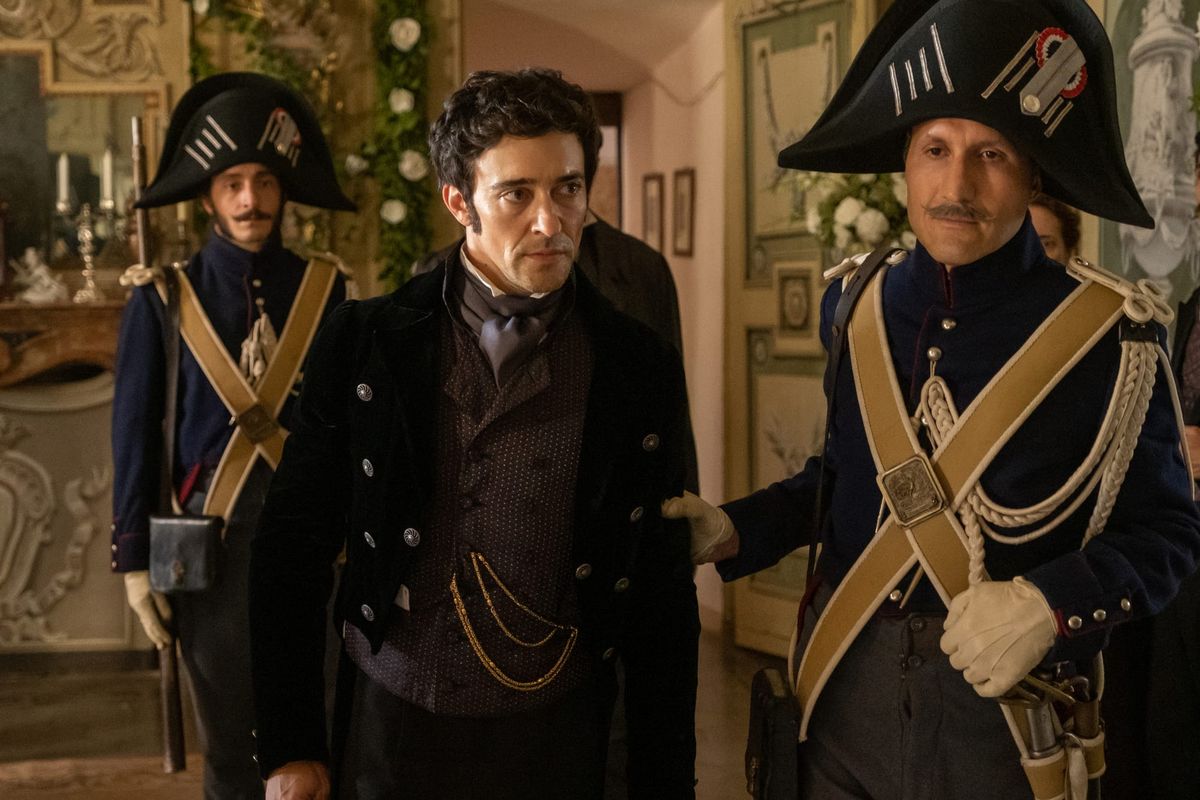
Danglars gets financially ruined and arrested; Villefort is publicly disgraced. Both men lose their livelihoods and families (some more permanently than others). Edmond finally reveals his real identity. It all happens super quickly, and we get to spend very little time on anyone’s reactions.
To his credit, the complicated webs that the Count of Monte Cristo has been weaving for weeks do finally pull together into a cohesive whole. This is satisfying to watch if only because you really can’t help but respect the vision. But is it narratively satisfying, at least in terms of what these victories say about Edmond and his journey? Not so much.

Still, there’s probably a worthwhile moral lesson here: the Count doesn’t force any of his targets to do anything untoward. Does he encourage them? Definitely; Entrap them even? Maybe. But, for the most part, especially where Danglars and Villefort are concerned, he sows seeds that their own greedy and/or selfish natures act on.
It’s Danglars’s greed that closes his eyes to any hint that the mysterious Count of Sparda might not be who he says, and that allows him to profit from his wife’s illicit insider trading. It’s Villiers’s ambition that nearly killed his own son. These are both men who let their own doom in by the front door — Edmond just held it open for them.
To Edmond’s credit, his scheming isn’t all bad. After all, he pretty much gets Valentine out of jail and helps her reunite with Maxmilian. He provides Eugenia with introductions and an opportunity to flee the marriage she’s never wanted, so she can pursue her dream of singing professionally in Rome.

Interestingly, the show makes several key changes to the end of Alexandre Dumas’s novel, which soften our perspective of Edmond’s journey in multiple ways. The series has toned down Héloïse de Villefort’s poisoning spree — she actually attempts to kill Valentine in the book — and although it keeps her decision to kill herself and her young son once her crimes come to light, the moment primarily focuses on Edmond’s horrified reaction when confronted with the unforeseen long-tail cost of his revenge scheme.
It’s nice to know that Edmond is capable of realizing when his actions have gone too far, and it’s also a smart narrative decision. He’s so affected by Villefort’s obvious grief that he doesn’t even bother to reveal his secret identity. In fact, the series ultimately ends without Villefort ever finding out the truth! (In the novel, Edmond not only reveals himself, but his actions drive Villefort insane, and all this occurs before the good Count tries to heal young Edouard with a potion.)
The other big change comes right at the end. Edmond and Mercedes reunite on the cliff, looking out toward the imposing Castle d’If, in a position that somewhat mirrors the end of the show’s first episode. He credits his thoughts of her with keeping him alive in prison. He admits that he’s now planning to leave, grimly recalling Abbé Faria’s warning that “If you’re planning revenge, dig your own grave first” in a sort of roundabout admission that he’s been damaged by all the things he has done.

However, as Mercedes takes his hand and smiles, promising that love can heal, the series fades to black, leaving us with a very strong implication that the two will somehow find a way to put their relationship back together, despite all that has passed between them and around them. This is another big swerve from the book, in which Mercedes is passively resigned to her fate and ends up living alone in Louis Dante’s old house, while Edmond ends up getting together with Haydee, of all things. Yes, really.
(No matter how you feel about Edmond and Mercedes’s relationship — which I admittedly found sort of treacly and boring — we can all agree that this ending is still leagues better than that, yes?)
This Count of Monte Cristo ultimately ends as it lived: A mixed bag that never quite lives up to the potential inherent in its source material. One day, maybe we’ll get the big, splashy over-the-top version of this story we deserve, one that leans into the outrageous nature of Edmond’s schemes as eagerly as it wrestles with the nuance of his choices. This wasn’t that show, but maybe it’s a step toward it.
The Count of Monte Cristo is currently streaming on the PBS app, PBS Passport, and the PBS Masterpiece Prime Video Channel.