
Lionsgate+ Is the Latest Service We Don’t Need From Amazon
Amazon has seen the future, and the future is in recreating the cable bundle.

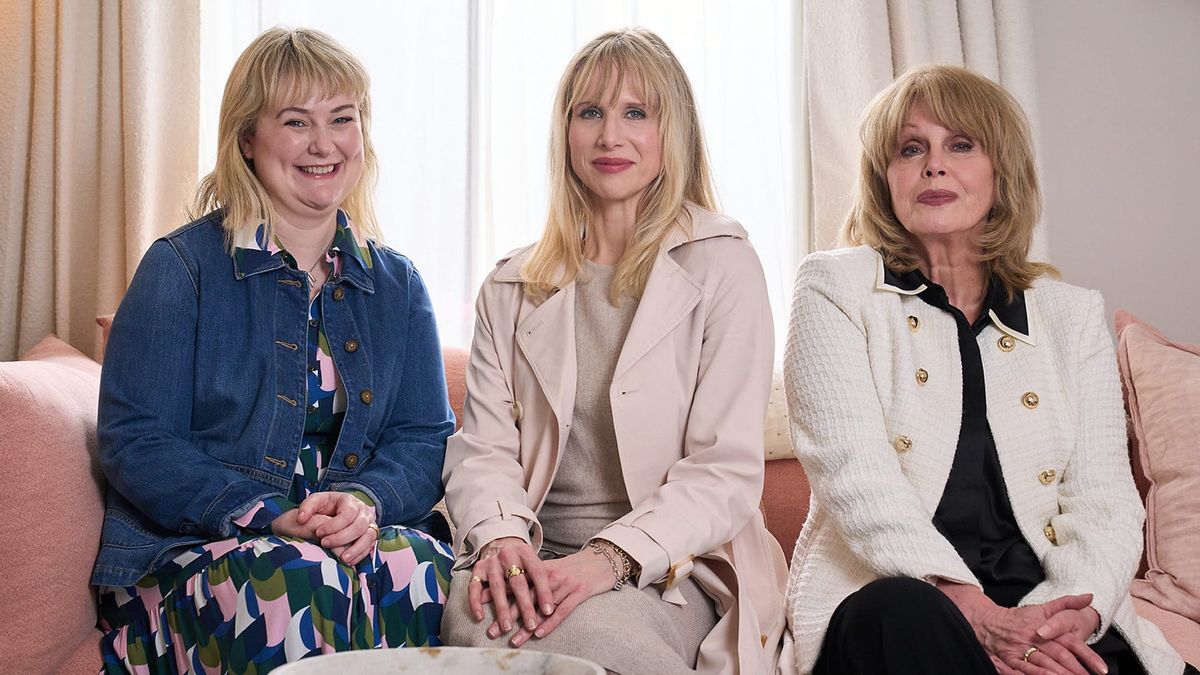
It feels like we’ve reached a turning point in TV history. On the same day that Paramount swallowed Warner Media whole, likely digesting it for 1000 years in the sarlacc pit of American State TV, Amazon announced a deal to stream the Primetime Emmy Awards exclusively through 2035, pulling them from broadcast TV for the first time in 30 years, promising the event would stream “Free on Prime Video.” That means the awards ceremony will stream free on the platform; you don’t need to subscribe to Amazon Prime to watch. (If it were paywalled, the phrasing would be “Free for Prime Subscribers.”)
However, the wording is muddy enough that someone might read it as needing Prime to watch for “free.” Consumers have solid reasons to assume the worst about Amazon, but none stronger than its “add-on” subscription system. That system is at the heart of how the company is currently stumbling towards becoming Streaming Cable, something it has been uniquely positioned to jump on ahead of its competitors since 2019, and has failed to capitalize on for nearly a decade.
Amazon has seen the future, and the future is in recreating the cable bundle. As the purveyor of the Fire TV Stick, one of the two most-used devices in the U.S. for accessing streaming apps, and its unique “add-on” system, Amazon was (and still is) in the best position to roll up all these major streaming services into a single, one-price entity. Force the different studios behind the app to accept being bundled as part of the price for Fire TV Stick users being able to access the app in the first place. Then offer a bundle that includes every major streaming service, and voilà: streaming cable.
However, instead of using its clout to do this, Amazon is inventing new add-on packages made up of shows that were available on Amazon Prime Video and forcing viewers to pay extra for them. (Not that anyone would know; Amazon’s deeply user-unfriendly interface helps make this possible.) Creating networks from one mass of programming and then claiming that they’re separate entities to bundle isn’t rebundling. It’s why Prime Video has failed to break out of its perpetual third-place position behind Netflix and the Frankensteinian conglomerate known as the Disney+ app.
Hundreds of Add-Ons

Amazon has many “OTT (Over-the-top) Streaming Services.” (The company claims more than 100.) The best-known are mainstream services like HBO Max and Peacock, along with larger, more successful niche services like BritBox, Acorn TV, and others. But most are small-time niche services, many of which are available via other platforms.
Many are services like Sony Pictures Core, which launched for the PlayStation 5 and is now also available via Prime; Moviesphere+ started on YouTube and has added Prime to its options. Some, like CJENM and MHz Choice, focus on foreign-language TV series, either based overseas or domestically, while others, like Revry and Dekkoo, focus on LGBTQ+ stories. However, all are available on a variety of platforms, like Roku, or as a web-based service.
Then there are add-ons like Cohen Media Channel and Ownzones. These are, for lack of a better term, intermediaries. They act as third-party distributors for tiny Hollywood production companies that lack the connections (or capacity) to distribute the small libraries of forgotten, older black-and-white films/TV shows they own the rights to, or for small-time foreign production companies that couldn’t get larger distributors to pick up their films.
But at least these services bring titles to Amazon that it didn’t already have access to. Consumers who add these to their Amazon bill do so for the convenience of having everything in one place; they could just as easily subscribe via Roku, YouTube, or any other number of ways.
MGM+

Then there’s MGM+. Originally branded as Epix, MGM+ is Amazon’s highest-profile internal subdivision since Amazon absorbed MGM Studios in the 2022 merger. The studio has kept MGM’s programming separate from the main roster since it relaunched under the Prime umbrella in 2023.
Perhaps, had MGM+ shown any staying power, this would make sense, even though all signs point to a decline in numbers for multiple streaming services that stay under the same company. However, over the last three years, MGM+ has delivered flop after flop after flop after flop after... well, you get the picture. The shows are good; the platform is the problem. By the time the Broccolis took Amazon for another billion over James Bond, it was obvious that MGM+ was a failure.
If this were all due to some legal mumbo jumbo that forced Amazon to keep MGM and Prime separate, we might understand. But the company recently gave the game away with the 2026 film, Project Hail Mary, an “exclusive” to MGM+ – until no one watched it there. The company was forced to move it to regular Prime before the hit film got anywhere close to making the Nielsen streaming rankings. It also proved what most of us suspected: Amazon could fold MGM+ programming into Prime literally at any time and gain a massive audience for shows like Rogue Heroes and Robin Hood. It’s just choosing not to, which is a massive, baffling own goal.
Amazon should stop pretending MGM+ is a real going concern and fold it into Prime, as it did with Freevee in 2024 after the second service, which was literally free to stream, turned out to be a failure. So many good shows are trapped on MGM+, and literally no one outside the business (and scarcely anyone in it) even knows it exists. Legacy of Spies, Westies, that Jon Hamm show (the first time I’ve seen a show that belongs on Apple TV showing up on the wrong service)... Ok, maybe not Nine Bodies in a Mexican Morgue, but you get the idea — good material, stranded on a desert isle of a platform.
It was starting to look like we’d have to wait for an entire James Bond spinoff TV series to flop on the platform before anyone would admit the inevitable. But the last year has shown that encouraging people to shell out for MGM+ when it is clearly just Amazon isn’t just an accident of too many mergers. It’s the entire point.
Lionsgate+
Amazon launched its latest service with no fanfare: Lionsgate+. Originally called StarzPlay until 2022, Lionsgate+ was initially just the brand name of the Starz streaming service outside the U.S.* When Lionsgate divested Starz in early 2024, it shuttered the service, with most assuming it would find homes on other services for the shows and films it had the rights to.
(*This isn’t all that unusual; anyone who accessed Disney+ outside the U.S. before 2025 will have noticed that the “Hulu” brand didn’t exist outside our country. Everywhere else, the tile read “Star”. Disney finally rectified that in October 2025 – except in Japan, where, for legal reasons, the Star brand remains in place.)
In April 2026, Lionsgate+ relaunched globally. (Thank you to the BlueSky user who pointed it out to us.) However, it no longer exists as a standalone service. You cannot subscribe to it except as a Prime Video add-on. Outside the U.S., it regained the rights to most of the Starz shows it had before, since the library hadn’t found a permanent international home in the interim, and Starz wants the Power Universe series and Outlander: Blood of My Blood available to a global audience. But in the States, the lineup is almost all Lionsgate films: The Hunger Games franchise, the first Knives Out, plus some unscripted series, all of which were part of the base Prime Video subscription until they moved behind this new, extra paywall.
The only additions for the U.S. market are two relatively unknown-in-America Sharon Horgan comedies: Motherland and its sequel, Amandaland, which Lionsgate’s U.K. arm co-produced with the BBC. In the States, Sundance Now picked up Motherland in 2018 and streamed all three seasons. (We’d hoped the Sundance rebrand and Amandaland’s 2026 Christmas special would be enough to take both to BritBox, but sadly, no.)
But beyond those, everything on Lionsgate+ was already available on Prime for base subscribers... and now they’re not. However, it’s not the only add-on that adds little content and more dollars to your bill.
The Wonder Project
We missed the launch of Amazon’s Wonder Project, which rolled out in October 2025, though we most likely wouldn’t have covered it initially anyway. An evangelical-based “faith service,” its “exclusives” include shows like House of David and The Chosen, series that were available on the basic Prime Service before Amazon unceremoniously walled them off. (It eventually put them back on Prime Basic when no one watched.) However, Amazon isn’t limiting itself to only blocking off the religious programming it commissions. It’s also putting certain Wonder shows produced in conjunction with BBC Northern Ireland behind the extra paywall.
As we noted in our October 2026 listings, the U.K. is specifically a Christian country, far more than America has ever been. The BBC and its fellow public broadcasters commit to a fair amount of religious programming and live streams of church services during the Christmas season, seeing this as part of their remit to enrich the lives of the British people by giving them access to beautiful music and sermons that they might not otherwise encounter.
So it’s not that big a surprise that BBC Northern Ireland sees it as an acceptable partner for religious-esque feel-good programming, or that Leonard & Hungry Paul, a feel-good comedy (emphasis on the feel-good), is one of the first U.K. series Wonder picked up, along with the gentle You & Me. Other collaborations BBC NI and Wonder are currently working on include the forthcoming Rewarding, a series about people who dedicate their lives to helping those with developmental delays. Much like Leonard & Hungry Paul, this isn’t religious programming per se, at least not as Americans might think of it; it’s faith-based, feel-good viewing, without an attempt to proselytize.
It is frustrating that these shows are walled off, forced to be part of a service that is unwelcoming to any non-evangelical Christians who might enjoy them. However, even if the Wonder Project were just the home of everything made by Angel Studios and other TV versions of Bible stories, forcing evangelical viewers to pay extra for them is an ugly way to make ends meet.
 Ani Bundel
Amazon’s idea nickel-and-dimes consumers by pretending these are regular niche add-ons, instead of subdivisions of shows already available via Prime Video. However, we’ve already seen that not only does having multiple services under one studio fail, but building a network of niche streaming services in hopes of tying them together to see if they’ll float also doesn’t work. AMC Global may have survived longer than anyone expected; but, so far, the experiment hasn’t been a financial success, and all signs point to the company’s most recent moves to streamline its brands as an expensive renovation to get the house ready for sale.
One might ask whether it’s fair to complain that Wonder and Lionsgate are walling off their titles like this. It would be one thing if these services were available on other platforms; then competition would exist, and consumers could drop Prime Video and subscribe to Wonder or MGM+ via Roku.
Instead, these companies are allowing their viewers to be exploited. If they wanted more for the rights to their TV shows and films, Amazon should pay. This “passing the cost onto the consumer” behavior is exactly what’s wrong with today’s technology landscape, and it jeopardizes the industry as a whole by threatening to price itself out of its own market. Until Amazon admits that bundling requires working outside its own library, it will remain the streaming service that fumbled its own future.
If you’re reading this viewing guide, you’re probably the kind of person who doesn’t like to miss out. Upgrade to a paid subscription to get the full Telly Visions experience. Read every recap and review, never miss an episode of our podcast, and more.