‘Maigret’ Season 2’s Final Case Is Dog Eat Dog
Guichard's newest attempt to trap Maigret brings in a case from 15 years ago.


Georges Simenon’s Maigret novels are often called the French answer to Sherlock Holmes. Both feature a singular detective who solves mysteries with an uncanny ability to see what most people miss, and both enjoyed widespread popularity throughout the 20th century. However, there’s a third similarity: in the novels, both characters arrive fully formed. They are as they stand, and any baggage they might have from previous decades of life is stashed in a little carry-on with wheels and a handle, neatly stored in a corner.
This is anathema to the current trend in 21st-century storytelling. It has been nearly a century since Freud died, but the belief in his theory of psychoanalysis has only grown since the turn of this century. We don’t like static characters; we want to know their traumas, their emotional journeys. We debate if Sherlock is neurodivergent, psychoanalyze characters like Mary Bennet, and create entire seasons’ worth of backstories for the Forsyte family.
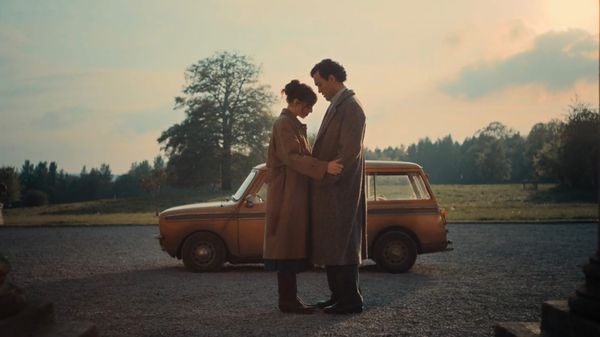
Maigret is no exception. As actor Ben Wainwright told us in our interview, he’s not “Young Maigret,” but he is a young-er Maigret, and that his job is to figure out how this version becomes the middle-aged portly man in the bowler hat. Hence the subplot where Louise – who will one day become the childless Madame Maigret from the novels – pushes them to leave Paris. Maigret faces two diverging paths: they move back to the country and take over the estate once run by his father (Ralph Berkin), with children to follow; or they stay in Paris and become the people Simenon wrote about.
(The flashbacks emphasizing his struggle with young Maigret and Louise, played by Anders Grundberg and Reka Szabo, are sweet, but unnecessary. As is the sub-sub-plot that Cavre’s wife, Marie, is expecting their first kid.)