Mergers & Acquisitions Come For ITV
The streaming revolution started in the U.S., but the fallout will be global.

The streaming revolution may have started in the U.S., but the fallout has been felt around the globe. There is very little in the entertainment landscape that hasn’t been affected by internet speeds crossing the invisible threshold from 30 minutes of buffering to watch a two-minute video to streaming on demand. From the sudden uptick in popularity of K-Dramas to TF1 and Canal+ now residing within Netflix and Disney+ respectively in France, every country is transforming.
In the U.K., the only network that was on the ball in making the transition to streaming was the BBC, which launched BBC iPlayer in July 2007, three whole months before Hulu was even officially founded. Both were rooted in the same impetus – YouTube was eating their lunches by being the only mainstream way to stream TV series the morning after they aired. However, Hulu was a consortium – three U.S. networks working together to make a single destination for streaming TV. The BBC was just the BBC (and BBC Two, Three and Four).
Hulu helped carry the three networks that joined it – NBC, ABC and Fox – into the current landscape. (CBS/Viacom, now Paramount, was the only major TV network that did not join, one of the many reasons it was the first to collapse.) But the BBC’s iPlayer launch left the rest of the TV landscape behind. While Channels 4 and 5 have managed to make up ground in recent years, ITV – much older and more established – had a harder time shifting gears. Like Paramount, it is about the head the way of the dodo, with the Comcast-owned pay-TV Sky network absorbing the bulk of the public broadcaster, leaving only its production arm, ITV Studios, for someone else to scoop up.
The British television landscape is very different from the American one – the government’s foray into financially backing small-screen networks to ensure highbrow and educational programming was a major part of the post-war Great Society, and it’s why the BBC – and ITV to a lesser degree – have been the gold standard of English-speaking television. However, it made the streaming revolution hit differently over there. Here, when the linear ratings of broadcast networks NBC, ABC, CBS, and Fox collapsed in the face of Netflix and YouTube consumption, it was regarded as capitalist forces at work, the will of the markets, and something the production companies that owned them were solely responsible for finding their way out of.
In the U.K., it was a government funding crisis, one that the Conservative Party used to impose even more austerity measures on the networks, even threatening to sell Channel 4 at one point. While the BBC’s early adoption helped it keep its head above water, the other major public service broadcasters launched their own variations, which rebranded every few years as they failed to gain a foothold against Netflix and Disney+. It wasn’t until 2022 that the current landscape finally emerged with ITVX and All4, which were eventually joined by My5 in 2025.
Channel 5 is already owned by an American company – the network was bought out by Viacom (now part of Paramount) in 2014, very early in the streaming wars, before people were paying attention to that sort of global consolidation. (It flew so under the radar that most people still don’t realize 5 is owned by Paramount, just as people didn’t know Disney owned Hulu for years.)
Now ITV has found itself in the same boat, but in an era when these giant mergers no longer stay hidden in the business pages. Moreover, unlike the Paramount acquisition of 5 (an American network with no foothold in the U.K. buying a British one), Comcast’s NBCUniversal* already has a streaming service in the U.K. in Sky, the most successful pay network in the country, making this a merger that no one in the British public will be able to miss.
(*For those paying attention to the flip side of M&A, Comcast announced it is divesting NBCU because the latter is drowning in debt only a week before this announcement. Sky – and supposedly ITV – will go with NBCU.)
Sky also needs bulking up. For decades, the network’s success was predicated on being the only legal way to watch HBO shows, a benefit it lost with the launch of HBO Max overseas.
Currently, what we know of this deal is that Sky claims, “Following completion, ITV channels and ITVX will remain free-to-air, with its public service broadcasting commitments continuing to be met in full. Audiences will continue to enjoy the programs they know and love, alongside trusted national and regional news. Sky will continue to be the home of world-class entertainment, unmissable sport, and market-leading connectivity.” In essence, Sky is asking to keep all the benefits of ITV being a PSB without it actually being one anymore.
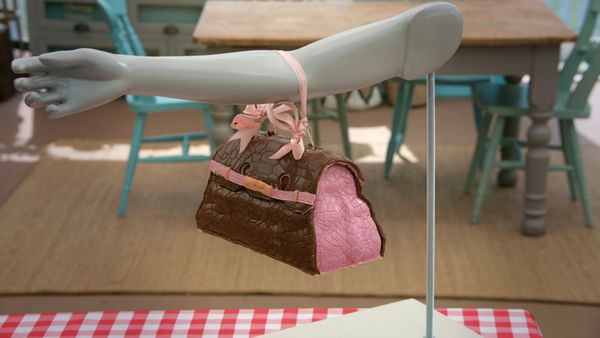
But the real question is whether or not the British government will agree to such a merger. Lisa Nandy, Secretary of Culture, Media and Sport, is already making noises about the U.K. balking at the Paramount-Warner Bros. deal. Sky and ITV are doing their best to minimize the business impact by excluding ITV Studios from the merger. Sky is even sweetening the pot for whoever winds up buying that part of the company by signing Love Productions – the company that produces The Great British Baking Show – over to ITV Studios in a side deal that screams of trying to fit under a certain billion-dollar cap.
(ITV Studios insists that gaining Love Productions means it can remain independent. We’ll see.)

But the U.K. (and Europe) is not America. They have semi-functioning governments and take actual stances against monopolies. There’s no guarantee that Sky and ITV will be able to get this deal through Parliament, especially one that’s soon to be run by progressive Labour PM Andy Burnham.
All that being said, something in the U.K. has to give way, whether it’s forcing American streaming services to help fund U.K. PSBs or allowing capitalism to finally take over major networks after fighting that inevitability for almost a century. At this point, it’s too hard to say how all this will play out, but whatever the outcome, the British TV landscape will never be the same.
Join the conversation on our Discord server. Sign up today!