‘Sense & Sensibility’ & Sisterhood
The new 'Sense & Sensibility' sadly won't stand the test of time.

It is a truth usually left unacknowledged that Jane Austen’s Pride & Prejudice has outsold her other five finished novels combined by an order of magnitude; estimates put Austen’s novels at 30 million sold globally, 20 million of which are copies of P&P. On screen, P&P leads by a wide margin; the “gold standard” adaptation cited is the Andrew Davies 1995 TV series, with Joe Wright’s 2005 film “a massive aesthetic driver on social media.” There is no single registry for written novel sequels, but scholars and publishers estimate 80-90% derive from P&P.
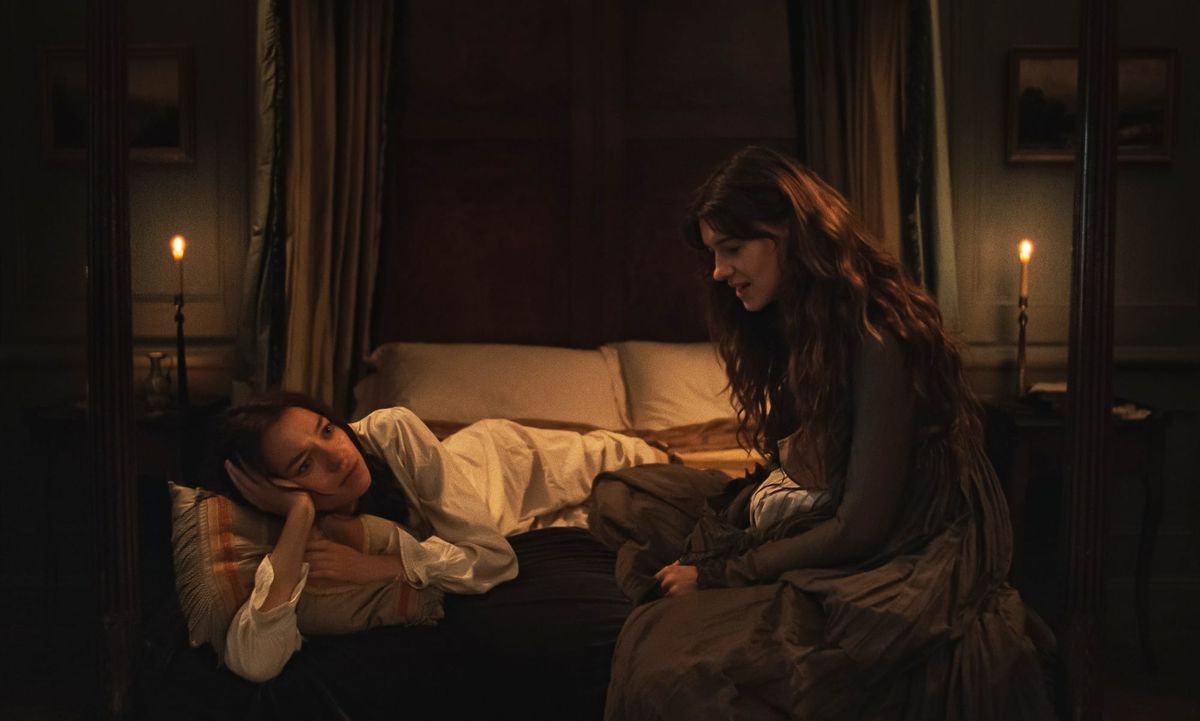
These numbers matter. Faced with a sixth period-faithful version of Sense & Sensibility in the last 55 years, one upon which money has been lavished and starring Daisy Edgar-Jones (Normal People) and Esme Creed-Miles (The Doll Factory) as sisters Elinor and Marianne, respectively, it seemed prudent to understand how this project came about. The only version of S&S that still reaches a mass audience is the Ang Lee 1995 film, starring Emma Thompson and Kate Winslet. Even more telling: director Georgia Oakley says “her inspiration” was not Austen’s book, but the 1995 film, and she advised the actors not to read Austen’s book, but Mary Wollstonecraft’s A Vindication of the Rights of Woman. The scriptwriter, Diana Reid, was also attracted by the 1995 film; she claims to be a reader of Austen’s novels, but the choice of S&S was above all a commercial one, suggested to her by her agent-friend, and because it seemed highly unusual to have sisters at the center of a romance, instead of heterosexual lovers.
This background explains the film’s anomalies. The makers seem not to know Sense & Sensibility is a novel emphatically about sexual awakening and betrayal, treachery, and indifference on the part of those who arrange and enact marriages for money, rank, and real property, of which the Dashwood sisters and their mother have been unexpectedly wholly deprived as the book and film begin. They risk becoming homeless and move from place to place, house to house, seeking permanency, safety, and peace in which to live out their identities.