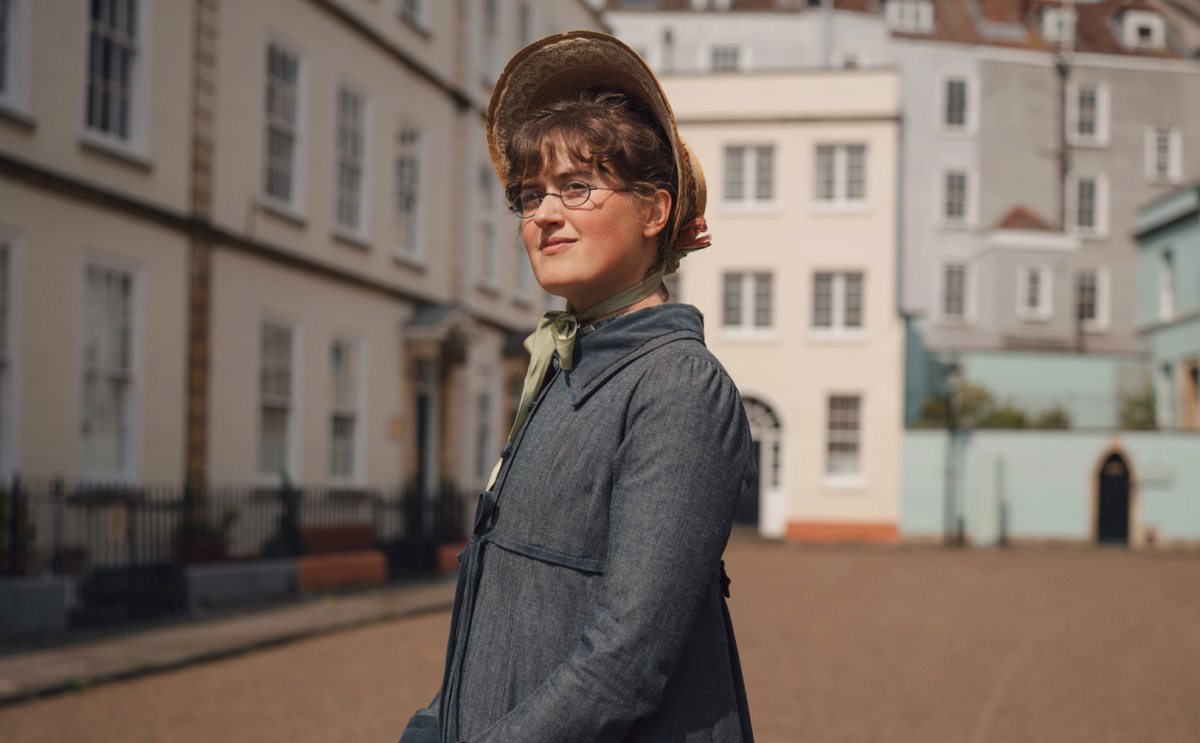
Mary Tackles High Society in 'The Other Bennet Sister'
"We do not run and hide from the Caroline Bingleys of this world – we stand our ground.”
Just as we were expecting Mary to resume her role as Mrs. Bennet’s punching bag and minion, Episode 5 of The Other Bennet Sister takes a different turn. Mary has decided to stay in London for a while longer, and this may have something to do with meeting the dashing Mr. Ryder. She pens a letter to her mother that she won’t join the family at Pemberley just yet, because even though the Gardiners’ governess has returned, they want Mary to stay. The family has also received an invitation to Lady Winspear’s ball, a step up the social ladder for Mary, and her new friend, Mr. Hayward’s fiancée, Ann Baxter (Varada Sethu), who intends for Mary to shine at the event.
Mary is reminded of Charlotte Lucas’s declaration that women must choose between misery and matrimony (the third, unspoken possibility is that marriage itself will produce misery). She tells Ann that her mother told her no man would marry a woman who wore spectacles, and Ann is shocked. It becomes her mission to make Mary the star of London society, and a lengthy makeover session begins. “Have you ever polished your skin?” Ann asks.
The skin-polishing treatment involves melted wax and onion as a face mask. Mr. Gardiner comments that Mary has stew on her face. Next, Ann coaches Mary on deportment and shares her expertise in ballroom etiquette.

“Remember, you are only allowed two dances with the same partner. Make eye contact fleetingly with the men you want to dance with, and avoid the eyes of those you do not. If a man asks you to dance, do not look too happy, nor too disappointed. You must look nonchalant.” She continues, “Think back to those times in your childhood when you did not have a care in the world. I am so excited for you, Mary. New love is the most romantic thing.”
(Not when Mrs. Bennet is your mother. Mary looks taken aback at this outlandish view of childhood.)
But Ann admits that the early elation of falling in love fades, and for a moment looks troubled, possibly thinking of her lengthy engagement to Mr. Hayward.
Mrs. Gardiner spritzes Mary with perfume and advises her to remember to be herself. Somehow they’ve persuaded Mary not to wear either of her boldly-colored gowns, and she’s wearing white. Mr. Hayward greets the two young women and, at Ann’s suggestion, asks Mary to dance. They dance a minuet, considered old-fashioned by this time, but expertise in this dance was a standard by which high society evaluated a woman’s worth. Hayward and Mary make this rather staid (and difficult) dance surprisingly sexy.

Mary finds herself alone when Ann and Hayward take the next dance, and is pleased to spot Mr. Ryder, who greets her with enthusiasm, but admits he doesn’t enjoy this sort of activity. There’s nothing romantic about this formalized pairing-off, with women pressured into marrying men they don’t know, he tells Mary. Mary doesn’t agree with him, since for many women, marriage is a question of survival. But Ryder insists the heart should rule and sweep away the tired old conventions. Mary, though, was witness to her sister Lydia’s elopement with Wickham and understands all too well the effect on the Bennets if the couple had not married.
They dance a waltz together, only recently introduced from France this year,* and initially considered shocking. Mary, looking very serious, turns the conversation to reading. She’s enjoying Wordsworth at the moment, and confesses her love of lurid crime pamphlets. Ryder, in high spirits, leaves to fetch ices for Mary and Ann, and Ann comments that he does not conform to the rules of society.
And now, a short pedantry break ...
*It's 1814, according to the date on Lady Winspear's invitation, which is problematic for us Regency nitpickers. The waltz came over from Europe that year, along with a host of foreign statesmen and celebrities to celebrate the short-lived peace treaty that (temporarily) ended the Napoleonic Wars. It's unlikely the indecent waltz and the old-fashioned minuet would be performed at the same ball. Dance cards (another fancy French innovation) were not used in England until the 1830s if not later (Blame Georgette Heyer, Bridgerton, and zillions of Regency Romance writers).

Next, mean girl alert. Caroline Bingley (Tanya Reynolds) is in town and delighted to find the most vulnerable Bennet sister to harass at the ball. She commiserates with Mary about having to be a governess, and learning she has left her position, asks if she is in London to find a husband. Ryder invites Mary to a supper party and informs Caroline that Mary is a radical thinker. Caroline claims she looks forward to enlightenment and then leads Ryder away.
Ann warns Mary that Ryder is rich and privileged, and she should be more wary of him. Mrs. Gardiner notices that Mary looks sad and, at breakfast the next morning, asks her how she enjoyed the ball. Mary admits Caroline Bingley tormented her at the ball, and Mrs. Gardiner suggests she may be getting revenge on the Bennets, since she was convinced that Darcy was hers. At Ryder’s supper party, Caroline Bingley assumes the duties of a hostess, making sure the dining room is properly set up. Mary admires the bookcases and an insect preserved under a glass dome, the property of Ryder’s father.
Caroline catches Mary alone and delivers this zinger:
I have to say, Miss Bennet, how refreshing it is to see a young woman with the courage to defy the dictates of fashion, for most of us are foolish enough to want to look as well as we possibly can. You are an example to us all.
Mrs. Gardiner observes the interaction and doesn’t look pleased.

At dinner, Mary is seated between two strangers, a man with hearing difficulties who wields a huge conversation-stopping ear trumpet, and on her other side is Mr. Hurst (Fergus Craig), Bingley’s friend from Pride & Prejudice, who has a terrible cough. When he’s recovered, he flirts briefly with Caroline, and then Mary asks him if he’s interested in democracy (no) or geology (no again). He likes horses. Mary asks him to tell her all he knows, and he’s delighted to oblige. He creates a model of a horse from various foodstuffs on the table, and Mary suggests he name it Gerald. By the end of the meal, they are fast friends, and he offers to provide Mary with inside information on any racehorse she cares to bet on.
After dinner, Caroline attempts to chastise Mary, who responds that she was seated too far away from her and Ryder to have a conversation. A portrait of Lady Catherine de Bourgh hangs on the wall, prompting Caroline to recount a conversation with Lady Catherine in which Mary was unfavorably compared to her sisters. She then asks if Mary intends to marry Ryder, since she seems to do as much as she can to please him, and advises her to back off. Mary comes back with this zinger:
You seem to know a great deal about rejection. Is this a lesson you’ve learned from extensive study? Or do you have some experience of a more personal nature?

Caroline flounces off, and Hayward joins Mary, laughing with her about her new knowledge of horses. Awkwardly, he mentions that Ryder seemed to occupy a lot of her time at the ball, and he can intervene with him on her behalf if she finds him too overwhelming. Mary is somewhat astonished. She enjoys his company, that’s all.
Caroline, wanting a replica of her embarrassing Netherfield ball performance, insists Mary play and sing for the guests, who all end up chanting “Sing! Sing!” – even including those who Mary considers friends. Mary is shocked, and Mr. Gardiner comes into the room to tell her that her mother is very sick and that she must travel to Pemberley now. Mary knocks over the table that holds the treasured insect specimen, which falls to the floor and splinters. Ryder looks horrified for a moment before telling Mary not to worry, and she and Mr. Gardiner leave immediately.
The Other Bennet Sister continues with weekly episodes on BritBox on Wednesdays through June 24, 2026.