‘Trespasses’ Embodies the Heartbreak of The Troubles
'Trespasses' is a love story, not a romance.


Trespasses is a love story, not a romance. There’s no happily ever after here for Cushla Lavery (Lola Petticrew) and Michael Agnew (Tom Cullen), and they know it the second they lock eyes and brush hands across the bar at The Anchor pub in 1975, just outside Belfast. There’s no happily ever after for their neighborhoods, city, or country, either, and they know that, too.
An elementary school teacher and a criminal defense attorney would be a sensible enough pairing anywhere else, but over the course of Trespass’s four episodes, we see the gaps between them – age, marital status, and religion – steadily stretch into chasms they aren’t allowed to bridge.
Adapted from Louise Kennedy’s novel, Trespasses sets up an arc worthy of the most star-crossed lovers, particularly interfaith couples during The Troubles. Instant attraction? Check. Inability to stay away from each other despite significant obstacles to anything resembling a healthy long-term relationship? Double check. A honeymoon period of blissful and delusional flouting of the dangers they think they can outwit? Check and double-check! Death, mourning, more danger, and the eventual healing that comes with time? I was crying too hard to keep an accurate tally of checks by this point.
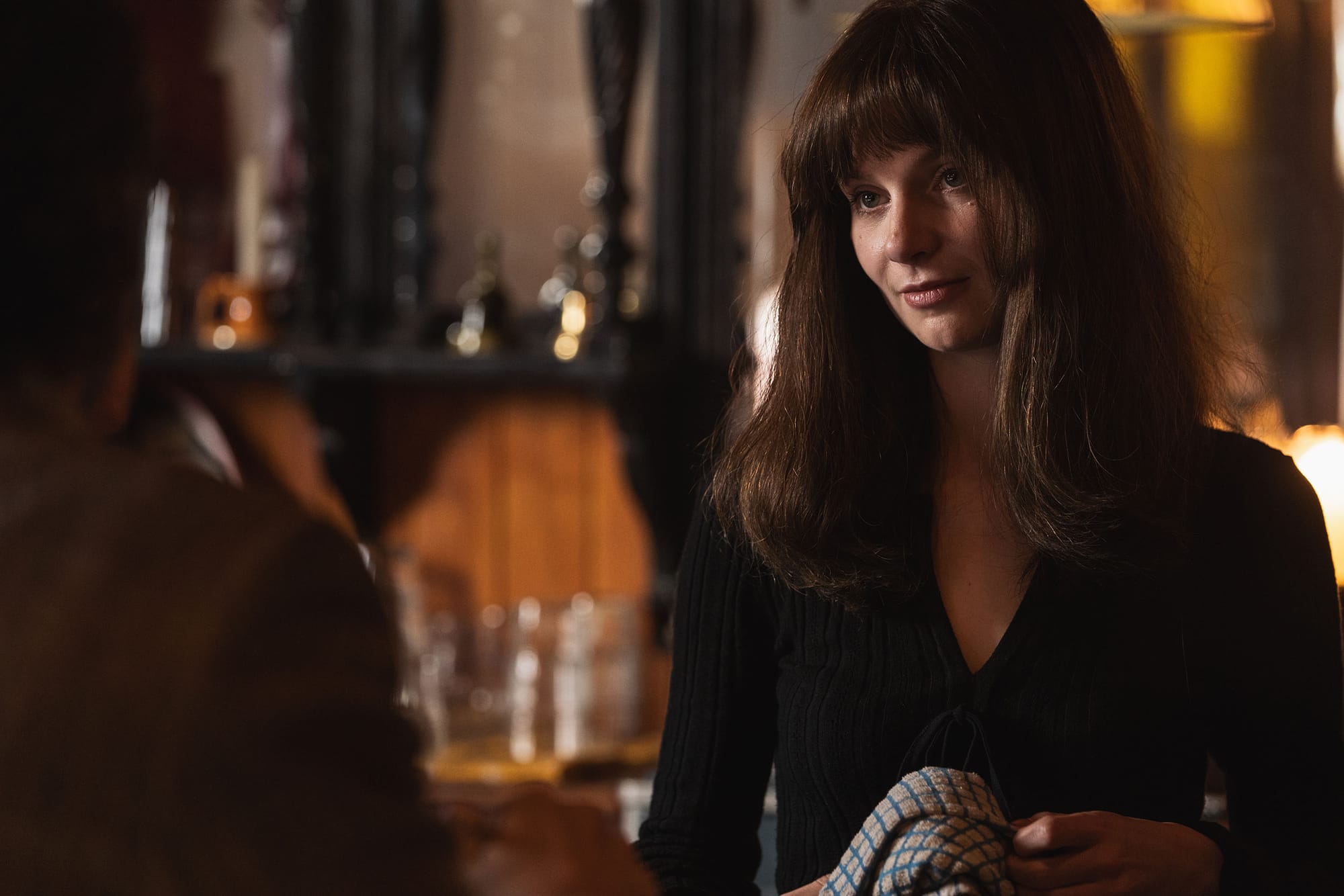
The Anchor, where the two meet, is the family bar Cushla helps her brother run, a non-denominational watering hole where a varied clientele of British Army officers from the local barracks rub shoulders with paramilitaries on both sides and elderly regulars. That’s a distinction the Lavery family wears with pride, but as the series’ four episodes unfold over just under a year, rising political tensions all but demand taking sides. The Anchor’s humble aspiration to remain an oasis of neutrality becomes impossible to maintain.
It’s easy to see what each sees in the other. Petticrew, every bit as good here as she was playing the historical figure Dolours Price in Say Nothing, is energetic, caring, and wry as Cushla Lavery, the 24-year-old from a reasonably well-off Catholic family. Tom Cullen, more soulful than he has reason to be in The Gold, is warm and idealistic as privileged Protestant defense attorney Michael Agnew, his charms amplified by his excellent taste in music. He’s also at least 15 years Cushla’s senior and is married. His wife, Joanna, lives in a psychiatric hospital, but her being out of sight and out of mind doesn’t make her any less of an important figure in Michael’s life or his prospective future with Cushla.
Petticrew and Cullen’s fine work is supported by the actors playing Tommy (Conlaoch Gough-Cunningham), Davey (Daithi Ó Haragain), and Gerry (Oisín Thompson). The higher-profile actors playing her brother Eamonn (Martin McCann, Blue Lights) and mother Gina (Gillian Anderson, The Crown) are under-utilized, with Anderson only finding room in the fourth episode to put across more colors than poisoned by grief, regret, and alcoholism.
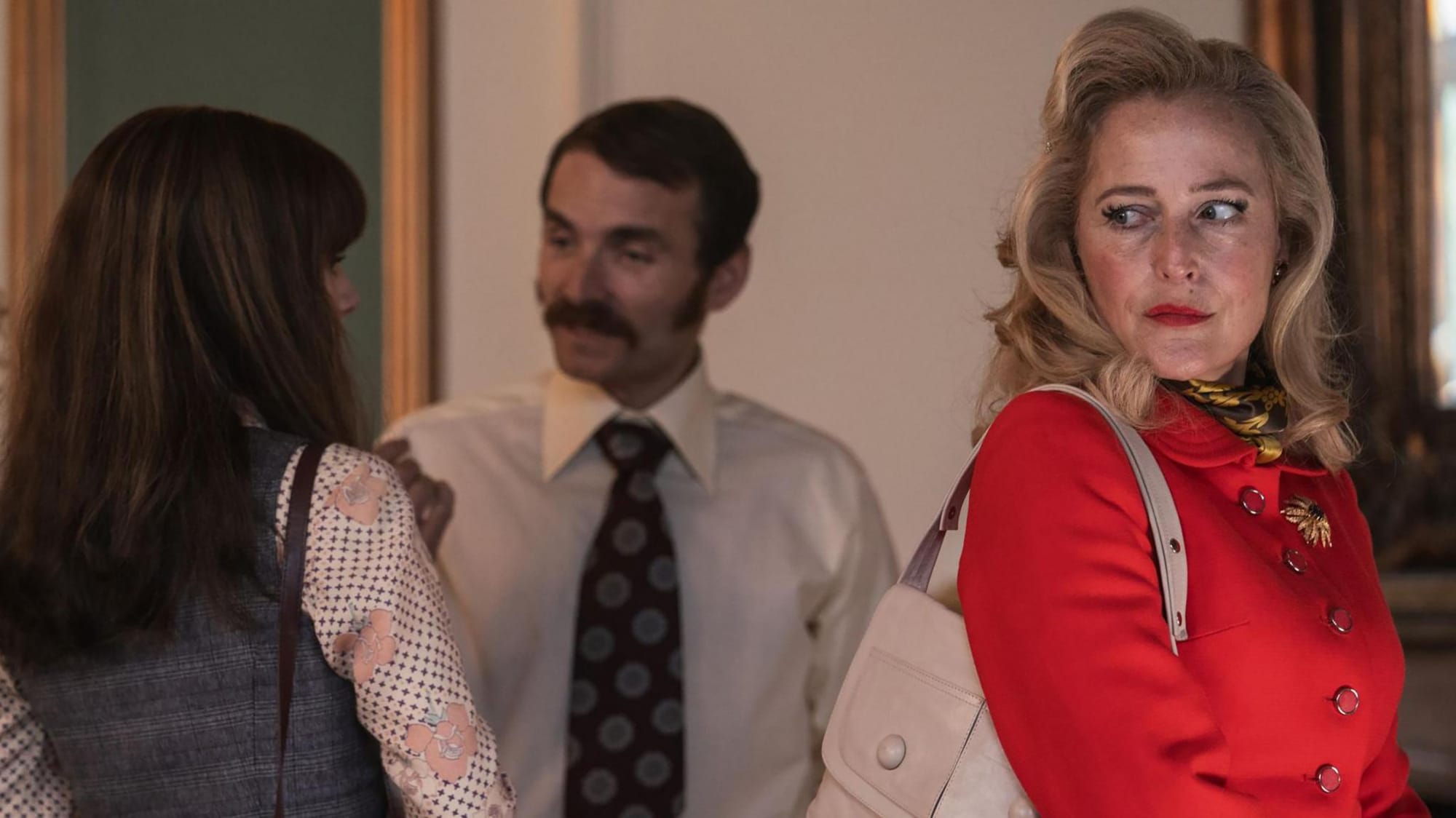
Trespasses is particularly successful in putting the viewer inside the often crushing context of Belfast during The Troubles. It’s a major city, but functions far more like a gossipy small town. It seems as though everyone doesn’t just know everyone else, but is privy to and happy to share intimate details of their neighbors’ lives. Cushla’s neighbor across the street, for example, a harmless-enough police sergeant, somehow knows all her comings and goings and insists on reminding her of it frequently.
Nosy neighbors are the least of her worries, though, because both armed agents of the state and paramilitaries are staking out Michael’s flat in Belfast. The pervasive surveillance everyone lives under (compounded by the generally conservative culture fostered by intense religious identities and allegiances) leads to justified paranoia and fatalism. If Michael has noticed they’re being watched, it’s already too late, and a dossier of material is out there waiting to be deployed. The two may as well carry on as they’ve been doing, try to be careful, and hang the consequences.
The consequences are about as dreadful as can be imagined, though, with Michael being shot to death one morning and Cushla only finding out about it hours after the fact, as she prepares to take some more of her clothes over to his flat. Although Michael had been under surveillance by Special Branch and the RUC (Royal Ulster Constabulary) because of his dedication to representing young Catholic men arrested for being Catholic in public, his death turns out to have been as random as it was sudden.
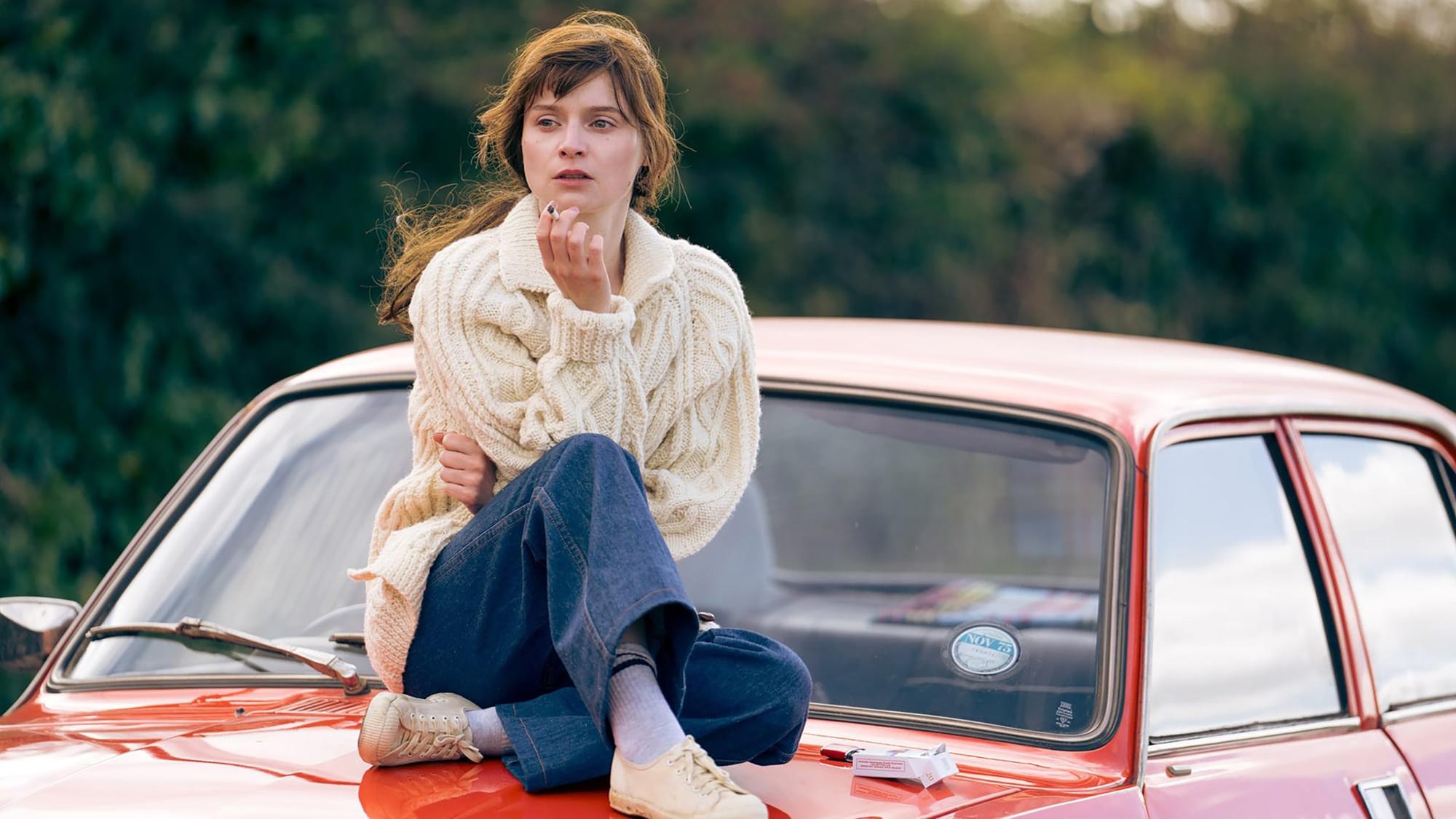
The Provisional IRA takes responsibility for his murder, and the RUC arrest a young provo for the killing. So far, so tidy. But the gunman turns out to have been Tommy McGeown, the older brother of Cushla’s sweet and clever student Davey, and he later tells Cushla that Michael wasn’t a formal target at all. Michael’s death came on a rainy day, and he’d offered a drenched Tommy a ride. Tommy saw the barrister’s wig in the backseat and, guessing wrongly that Michael was a judge, took the opportunity to strike a blow for a united Ireland on spec.
It’s tragic in every sense and at every level: Michael’s death is devastating to his family, and to Cushla, and in killing him, Tommy has destroyed his own life and his family’s hopes of living in anything resembling safety. Instead, the McGeowns are firebombed out of their house by an angry mob of their Protestant neighbors and, unable to find housing to fit the entire family, the parents are forced to send Davey to live in foster care.
The view from 10,000 feet up is even worse in its scope; with Michael dead, the three Catholic young men he had been defending are left without adequate representation. They’re almost certain to face long custodial sentences, stunting their own lives and blighting those of their friends and family.
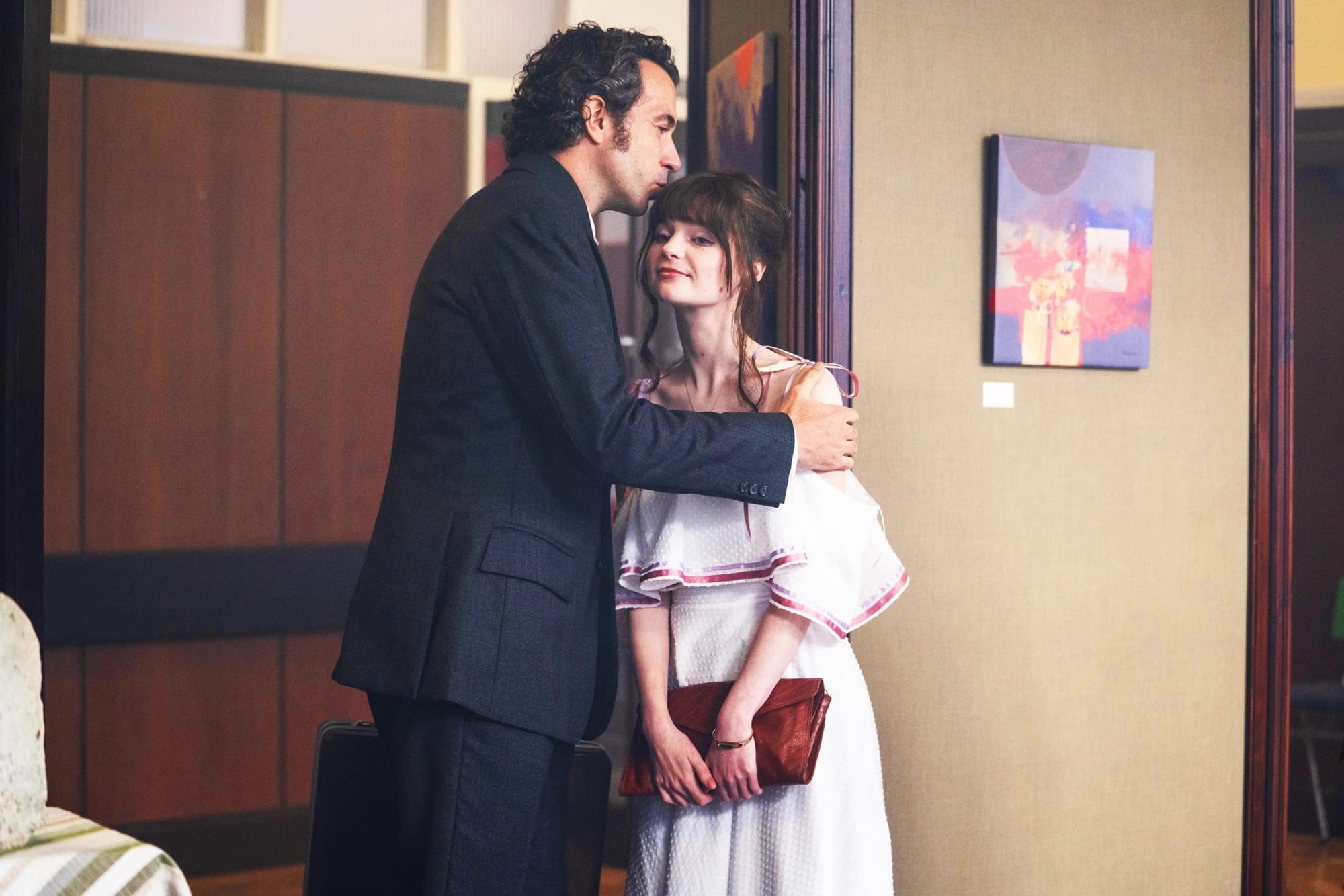
Despite Michael’s steadfast, even reckless belief that love would conquer all, Trespass doesn’t argue that love is the only way to peace. Or if it does argue that, it does so unsuccessfully. From our perch in 2026, it’s clear that even in the aggregate, no number of interfaith families like the McGeowns, no number of voices raised in peaceful song, no years-long Irish language learning circles could end the unofficial civil war tearing apart the six counties in the North of Ireland on their own.
Policy changes and political processes had to provide the final mile, and the Good Friday Agreement referendum of 1998 isn’t even a glimmer in anyone’s eye in Trespass. The 50 years between Cushla and Michael’s story and her warm, grace-filled reunion with Davey in an art gallery in the epilogue set in 2025 may as well be centuries.
Ultimately, Trespasses is a worthy, engrossing addition to the recent canon of Troubles-set films and TV series, sitting comfortably alongside Say Nothing, Derry Girls, and Once Upon a Time in Northern Ireland. It’s very well-suited to the current political moment in the United States, thanks to the fragile, defiant hope it holds out, reminding viewers that circumstances are what they are right now, but the future isn’t set in stone.
Trespasses will premiere on Sunday, September 20, 2026, at 10 p.m. ET on most local stations, the PBS app, and the PBS Masterpiece Prime Video Channel, and air weekly through mid-October.

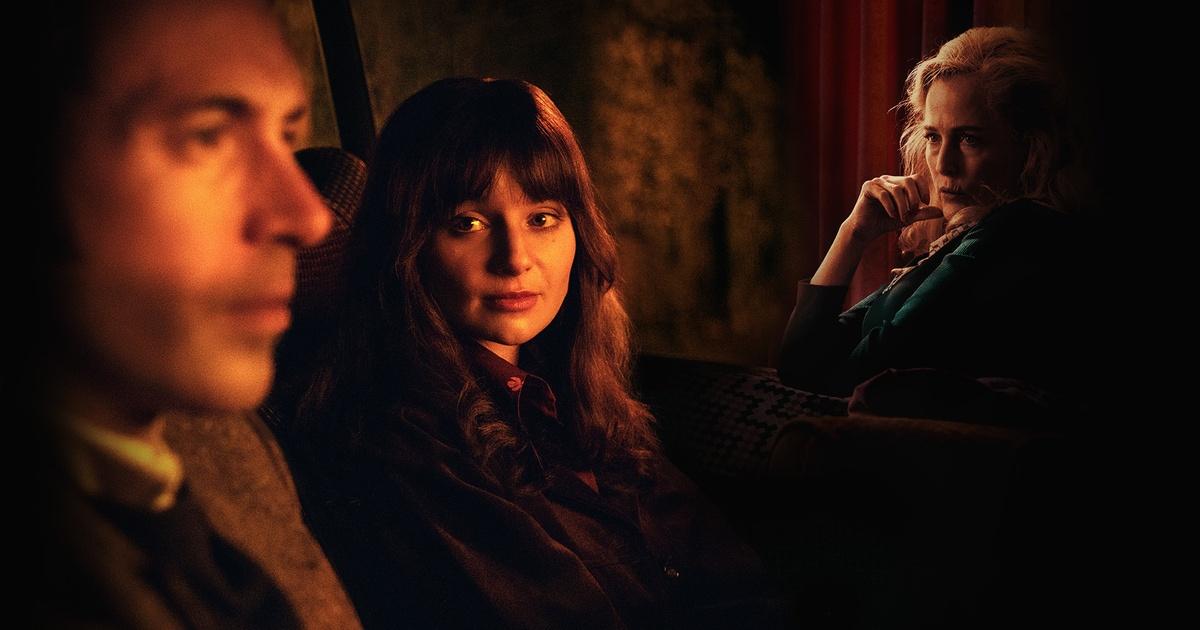
All four episodes will be available on premiere day for PBS Passport members.